apa yang sedang Anda cari?

Pada mesin turbocharger, pengelolaan panas gas buang bukanlah pilihan—ini sangat penting untuk performa, daya tahan, dan keselamatan. Salah satu solusi yang paling efektif namun sering diabaikan adalah... selimut pipa pembuangan Dirancang khusus untuk lingkungan termal ekstrem pada pipa knalpot turbo, selimut pipa knalpot secara signifikan mengurangi panas radiasi, melindungi komponen di sekitarnya, dan menstabilkan suhu gas buang untuk meningkatkan efisiensi sistem.
Halaman ini memberikan gambaran lengkap dan berfokus pada aspek teknik mengenai selimut pipa knalpot, termasuk cara kerjanya, mengapa diperlukan, pilihan material, aplikasi, dan panduan pemilihan untuk sistem knalpot otomotif dan industri.
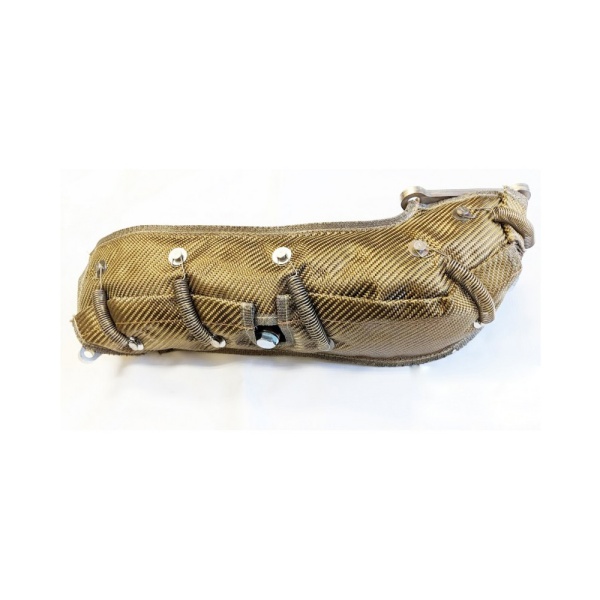
A selimut pipa pembuangan Ini adalah jaket isolasi termal suhu tinggi yang dirancang untuk membungkus pipa knalpot turbo—bagian knalpot yang berada tepat di hilir turbocharger. Area ini mengalami beberapa suhu tertinggi yang berkelanjutan dalam sistem knalpot, seringkali melebihi 600–900 °C saat beroperasi.
Selimut ini bekerja dengan menggabungkan serat isolasi konduktivitas rendah dengan lapisan luar tahan suhu tinggi untuk mencapai tiga fungsi utama:
Menahan panas radiasi dihasilkan oleh gas buang panas
Mengurangi perpindahan panas ke komponen terdekat
Pertahankan kecepatan gas buang yang lebih tinggi. di dalam pipa
Berbeda dengan pelapis knalpot tradisional, selimut pipa knalpot adalah sistem insulasi berlapis yang dibentuk dan dirancang untuk daya tahan jangka panjang, siklus termal berulang, dan lingkungan yang keras di bawah kap mesin.
Pipa knalpot turbo terbuka terhadap:
Suhu gas buang yang tinggi secara terus menerus
Siklus termal cepat selama akselerasi dan deselerasi
Aliran udara ruang mesin yang terbatas
Tanpa isolasi, panas ini memancar keluar, meningkatkan suhu di bawah kap mesin dan memberi tekanan pada komponen di sekitarnya.
Penuaan dini pada rangkaian kabel dan sensor
Degradasi selang karet dan konektor plastik
Peningkatan suhu udara masuk
Penyerapan panas mengurangi efisiensi turbo.
Risiko kegagalan terkait panas lebih tinggi
Selimut pipa pembuangan yang dirancang dengan benar mengatasi masalah-masalah ini langsung dari sumbernya.
Dengan membatasi kehilangan panas radiasi dari pipa pembuangan, selimut pipa pembuangan dapat menurunkan suhu ruang mesin secara drastis, sehingga melindungi komponen-komponen sensitif.
Menahan panas di dalam aliran gas buang membantu mempertahankan energi gas buang, mendukung respons turbo yang lebih cepat dan karakteristik tekanan dorong yang lebih stabil.
Komponen-komponen penting seperti saluran oli, saluran rem, rangkaian kabel, dan isolasi dinding pembatas ruang mesin akan mendapatkan manfaat dari pengurangan paparan panas.
Suhu eksternal yang lebih rendah mengurangi kelelahan termal, sehingga memperpanjang masa pakai komponen knalpot dan sistem terkait.
Dibandingkan dengan penutup knalpot lepas, selimut pipa knalpot menawarkan cakupan yang konsisten, pengikatan yang aman, dan tampilan yang profesional.
Kinerja selimut pipa talang sangat bergantung pada konstruksi materialnya. Selimut kelas industri biasanya menggunakan desain multi-lapisan yang dioptimalkan untuk isolasi dan daya tahan.
Bahan isolasi umum meliputi:
Tikar jarum fiberglass untuk ketahanan panas yang hemat biaya.
Isolasi silika tinggi untuk lingkungan suhu ekstrem
Serat basal atau keramik untuk paparan panas tinggi terus menerus.
Bahan-bahan ini memberikan konduktivitas termal yang rendah sekaligus tetap stabil di bawah panas yang berkepanjangan.
Benang jahit suhu tinggi seperti kawat baja tahan karat, benang silika, atau benang aramid digunakan untuk mencegah delaminasi dan menjaga integritas struktural selama getaran dan siklus termal.
Permukaan luar dirancang untuk tahan terhadap abrasi, paparan minyak, kelembapan, dan keausan mekanis. Pilihan umum meliputi:
Kain fiberglass yang diberi perlakuan panas
Kain silika dengan perawatan anti-sobek
Penguatan jaring baja tahan karat untuk kondisi ekstrem
Selimut pipa knalpot banyak digunakan di sektor otomotif performa tinggi dan OEM, termasuk:
Mesin turbo bensin dan diesel
Kendaraan performa tinggi dan yang telah dimodifikasi
Manajemen panas di ruang mesin yang kompak
Suhu gas buang yang tinggi secara terus-menerus
Persyaratan penahanan termal maksimum
Perlindungan terhadap komponen-komponen ringan di sekitarnya.
Siklus operasi yang panjang
Aliran gas buang yang tinggi
Keandalan yang lebih baik di bawah beban berkelanjutan
Selain penggunaan di bidang otomotif, selimut pipa knalpot semakin banyak diaplikasikan pada sistem turbo industri:
Generator diesel industri
Kompresor turbocharger
Peralatan pembangkit listrik
Sistem knalpot turbo kapal laut
Dalam lingkungan seperti ini, isolasi termal meningkatkan stabilitas operasional, meningkatkan keselamatan, dan mengurangi masalah perawatan yang berkaitan dengan panas.
Meskipun kedua solusi tersebut bertujuan untuk mengurangi panas buangan, kinerja dan daya tahannya berbeda secara signifikan.
Selimut talang adalah:
Sistem insulasi berlapis-lapis
Dirancang untuk bagian pipa tertentu
Lebih tahan terhadap minyak, getaran, dan siklus termal.
Pembungkus knalpot adalah:
Pembungkus tekstil satu lapis
Tergantung pada teknik pemasangan
Lebih rentan terhadap keausan dan penyerapan kelembapan.
Untuk pipa knalpot turbo, di mana konsentrasi panas dan keandalan sangat penting, selimut pipa knalpot khusus umumnya merupakan solusi yang lebih unggul.
Memilih selimut talang yang tepat memerlukan pertimbangan beberapa faktor teknik:
Evaluasi paparan suhu kontinu dan suhu puncak. Pipa knalpot turbo seringkali memerlukan insulasi yang dirancang untuk menahan panas tinggi secara berkelanjutan dengan margin keamanan tambahan.
Selimut tersebut harus sepenuhnya menutupi bagian terpanas dari pipa pembuangan tanpa mengganggu flensa, sensor, atau titik pemasangan.
Pertimbangkan paparan terhadap minyak, air, serpihan jalan, dan getaran. Lapisan luar yang diperkuat direkomendasikan untuk lingkungan yang keras.
Ruang mesin yang sempit mungkin memerlukan material insulasi yang lebih tipis dan berkinerja tinggi untuk menyeimbangkan ruang bebas dan kinerja termal.
Selimut talang berkualitas dirancang untuk pemasangan yang mudah menggunakan kait, pegas, atau sistem pengencang dari baja tahan karat. Pemasangan yang tepat memastikan:
Cakupan termal yang konsisten
Tidak ada pergerakan selama operasi.
Daya tahan jangka panjang
Inspeksi berkala disarankan, terutama dalam aplikasi olahraga motor atau aplikasi dengan getaran tinggi, untuk memastikan selimut tetap terpasang dengan aman.
Selimut pipa pembuangan BSTFLEX dirancang untuk aplikasi manajemen panas otomotif dan industri profesional. Keunggulan utamanya meliputi:
Bahan isolasi suhu tinggi yang dipilih untuk lingkungan yang menuntut.
Jahitan dan konstruksi yang diperkuat untuk ketahanan terhadap getaran.
Ukuran dan konfigurasi khusus tersedia untuk kebutuhan OEM dan aftermarket.
Produksi di bawah sistem mutu ISO9001:2015 dan IATF16949
Pengalaman terbukti dalam solusi perlindungan termal knalpot dan turbo.
Baik untuk kendaraan performa tinggi, sistem diesel tugas berat, atau peralatan turbo industri, BSTFLEX menyediakan solusi selimut pipa knalpot yang andal dan disesuaikan dengan kondisi operasi di dunia nyata.
Jika Anda sedang mengevaluasi solusi perlindungan termal untuk pipa knalpot turbo, memilih selimut pipa knalpot yang dirancang secara profesional adalah salah satu langkah paling efektif yang dapat Anda ambil untuk mengendalikan panas, meningkatkan kinerja, dan memperpanjang umur komponen.

No.10, Chuangxin North Road, Nanshan Park, Ningguo Economic and Technological Development Zone, Ningguo City, Anhui Province, China
telp/Whatsapp : 0086-15856303740
surel : sales@bstbraidedsleeve.com
Skype : vanesa-cheng