apa yang sedang Anda cari?
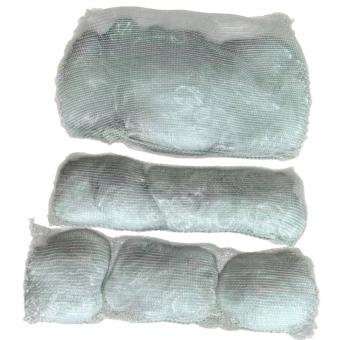
A silicone coated turbo blanket is a multilayer thermal component. The visible silicone-coated fiberglass fabric is only the outer cover. It should not be treated as the hot-face insulation, the insulation core, or the temperature rating of the complete blanket.
This distinction matters when buyers compare turbo blankets for automotive, diesel, marine and industrial applications. A supplier may quote a temperature for the silicone coating, another temperature for the fiberglass substrate and a much higher value for an internal insulation material. Those numbers describe different components and cannot be substituted for one another.
BSTFLEX offers silicone-coated fabric as one of the outer-cover options within its turbo heat shield blanket range. The complete construction can be specified according to the turbine housing, operating conditions, available clearance and purchasing requirements.
A silicone coated turbo blanket uses silicone-coated fiberglass fabric as the visible exterior layer around the insulation assembly.
The outer cover helps contain and protect the internal insulation while providing the required external surface for the application. Its specification may include:
fiberglass fabric construction;
silicone coating specification;
color;
coating weight or finish where required;
edge construction;
sewing thread;
attachment hardware.
The thermal insulation beneath that cover is a separate part of the blanket.
For this reason, buyers should not request only a “600°F turbo blanket,” “1000°C turbo blanket” or another single temperature without stating which layer and operating condition the value refers to.
The turbine housing is the hot side of the turbocharger. The face of the blanket closest to that housing experiences a very different thermal environment from the visible exterior surface.
A useful specification separates at least three temperature locations.
| Temperature Location | What It Describes | Why It Matters |
|---|---|---|
| Turbine housing | Temperature of the turbocharger hot-side housing | Establishes the heat source presented to the blanket |
| Hot-face / internal insulation | Temperature environment seen by the inner construction | Helps determine lining and insulation materials |
| Outer blanket surface | Temperature environment of the silicone-coated exterior | Helps determine whether the outer cover is suitable |
These temperatures should not be assumed to be equal.
A silicone-coated fiberglass cover can therefore be appropriate as the outer layer even when the internal insulation system is designed around a substantially hotter turbine-side environment. The suitability of the finished assembly depends on the complete construction and installation.
Material data sheets commonly give temperature information for individual materials.
For example, a supplier may have separate data for:
silicone coating;
fiberglass base fabric;
insulation core;
stainless steel reinforcement;
sewing thread;
edge binding.
The finished turbo blanket contains several of these materials in different positions.
The limiting component can therefore depend on where the heat is applied, how long it is applied and how the blanket is installed.
When requesting a quotation, ask for the temperature basis of the proposed complete construction rather than selecting a blanket from the highest temperature printed beside one raw material.
Silicone-coated fiberglass gives the turbo blanket a coated textile exterior rather than the woven appearance associated with BSTFLEX titanium/lava or carbon options.
For many projects, buyers select this construction because they require a particular external finish, color or environmental surface.
BSTFLEX silicone-coated turbo blankets can be supplied in different colors according to the product and project requirements.
However, color should remain a secondary specification.
The first questions should be:
What turbine housing is being insulated?
What is the expected operating condition?
What temperature is expected at the exterior cover?
What fluids, dirt, moisture or mechanical contact can reach the blanket?
How much space is available?
How often must the turbocharger be inspected or serviced?
Only after those questions are answered should color and branding be finalized.
Diesel applications can create different requirements from a small passenger-car turbo installation.
A diesel turbo blanket may operate in:
commercial trucks;
off-road equipment;
agricultural machinery;
generators;
construction machinery;
other heavy-duty engine systems.
In these installations, buyers should define the duty cycle rather than simply saying “diesel.”
For example, state whether the equipment operates continuously, intermittently, under prolonged load or mainly at low load with short high-temperature periods.
Also identify the surrounding components that require protection.
These may include wiring, fluid lines, hoses, sensors, body panels or nearby engine components.
A useful diesel turbo blanket RFQ therefore combines thermal information with installation geometry and maintenance requirements.
Marine applications introduce additional environmental questions.
The purchaser should identify whether the turbocharger is located in an enclosed engine room and describe:
ventilation conditions;
humidity;
possible salt exposure;
cleaning practices;
nearby pipework;
access for inspection;
required project documentation.
A marine engine turbo blanket should still be specified around the dry turbine-side housing.
Water-cooled components, wet exhaust sections and water-injection locations are separate systems and should not automatically be covered simply because they are near the turbocharger.
The required outer-cover specification should be reviewed against the actual marine environment rather than assuming that every silicone-coated blanket is automatically a marine-grade product.
Industrial engines and generator sets frequently operate for longer periods than aftermarket performance vehicles.
For these projects, thermal insulation should be evaluated together with the complete equipment enclosure.
Important information can include:
continuous versus standby operation;
generator load;
ventilation arrangement;
ambient temperature;
surrounding acoustic enclosure;
maintenance schedule;
adjacent exhaust insulation.
A turbo blanket cannot compensate for inadequate engine-room or generator-enclosure ventilation.
The purpose of the blanket is to manage heat transfer from the covered turbine housing as part of the overall thermal-management system.
The difference begins with the exterior material.
The BSTFLEX titanium turbo blanket uses a woven basalt/lava-fiber outer cover.
The silicone-coated version uses silicone-coated fiberglass fabric.
Neither outer material alone defines the complete insulation performance.
A buyer comparing the two should evaluate:
| Selection Item | Silicone-Coated Outer Cover | Titanium / Lava Outer Cover |
|---|---|---|
| Surface | Coated textile finish | Woven textile finish |
| Color options | Multiple colors may be available | Usually selected for its characteristic woven appearance |
| Internal insulation | Specified separately | Specified separately |
| Housing fit | Depends on pattern | Depends on pattern |
| Temperature specification | Must consider the complete assembly | Must consider the complete assembly |
| OEM customization | Available according to project | Available according to project |
The correct choice therefore depends on the requested exterior, installation and thermal specification rather than the product name alone.
An aluminized turbo blanket uses a metallic-faced fabric exterior.
This differs from a silicone-coated fiberglass outer cover both visually and structurally.
Buyers comparing these materials should identify the external heat exposure and surrounding radiant environment.
The aluminized outer fabric should also not be confused with BSTFLEX's optional embossed metal foil construction.
An embossed metal foil layer is an additional custom design feature. The required metal grade, thickness, embossing pattern, location and coverage should be specified separately.
A black silicone-coated turbo blanket and a carbon turbo blanket may both appear black, but they are not the same material.
The BSTFLEX carbon version uses a carbon fabric outer cover, while the silicone-coated version uses coated fiberglass fabric.
This is important for private-label customers because appearance alone can lead to an incorrect specification.
Purchase documents should identify the actual outer material rather than stating only:
“black turbo blanket.”
A clearer requirement is:
“black silicone-coated fiberglass outer cover”
or:
“carbon fabric outer cover.”
This reduces ambiguity during sampling and repeat production.
BSTFLEX has standard pattern references including T25/T28, T3, T3/T4, T4 and T6, together with model-specific patterns.
These names are useful starting points but are not complete fitment specifications.
Before ordering a silicone-coated T3, T4 or T6 turbo blanket, provide:
turbocharger manufacturer and model;
turbine-housing dimensions;
inlet and outlet arrangement;
internal or external wastegate configuration;
actuator and linkage location;
available installation clearance;
photographs of the installed turbocharger.
For an OEM or repeat-order project, a drawing or approved reference sample is preferable to relying on the T3 or T4 name alone.
An internally wastegated turbocharger requires special attention around the actuator and linkage.
The blanket pattern and fastening should not interfere with required movement.
For this reason, photographs should show both the turbine housing and actuator side.
Where an interference point exists, identify it on the drawing or photograph before the pattern is approved.
Do not treat cutting or forcing a standard blanket around an actuator as the normal solution to uncertain fitment.
A high-temperature outer material does not make fluid leakage acceptable.
Oil, fuel or other combustible fluids should not be allowed to contaminate a turbo blanket.
Any leak should be corrected before insulation is installed or returned to service.
For an industrial or marine application, the purchaser should also specify the expected external environment so the proposed cover can be reviewed against realistic operating conditions.
Claims such as oil-proof, fuel-proof, waterproof or chemical-proof should only be included when supported by the specific material and finished-product evidence required for that project.
The blanket is a mechanical assembly as well as a thermal assembly.
Depending on the design, purchasing specifications may need to identify:
attachment anchors;
stainless steel wire;
springs;
edge reinforcement;
sewing thread;
additional mesh or metallic reinforcement.
These details can become important on equipment exposed to vibration or frequent service.
A customer requiring stainless steel mesh reinforcement or another special construction should state the required location and objective. The reinforcement should not be assumed to be standard on every BSTFLEX silicone-coated turbo blanket.
BSTFLEX can add embossed metal foil to a custom turbo blanket according to customer requirements.
This is separate from the silicone-coated fiberglass outer cover.
For a defined project, specify:
metal grade;
foil thickness;
embossing pattern;
coverage area;
layer position;
attachment requirements.
If these details have not yet been defined, send a reference sample or drawing showing the design objective.
Adding metal foil should not be described as automatically increasing the blanket to a particular temperature rating. The entire construction still needs to be evaluated together.
A useful silicone coated turbo blanket RFQ should contain enough information to define both fitment and construction.
| RFQ Item | Information to Provide |
|---|---|
| Turbocharger | Manufacturer, model and part number |
| Engine / equipment | Vehicle, diesel engine, marine engine, generator or industrial equipment |
| Housing | Drawing, dimensions and photographs |
| Wastegate | Internal or external; actuator and linkage details |
| Operating conditions | Continuous and peak conditions where known |
| Outer cover | Silicone-coated fiberglass, required color and finish |
| Insulation | Required construction or thermal target |
| Reinforcement | Edge, mesh or other project-specific requirement |
| Embossed metal foil | Metal, thickness, location and coverage if required |
| Fastening | Wire, springs or project-specific hardware |
| Branding | Logo, label and packaging requirements |
| Order | Sample quantity, initial production quantity and repeat demand |
For OEM development, the sample should be evaluated against an agreed specification rather than approved only because it physically fits around the turbocharger.
For a new custom pattern, approval should normally cover three areas.
Fitment approval: Confirm coverage, closure position, access to connections and clearance around moving components.
Construction approval: Record the approved outer cover, insulation system, seams, edge materials and fastening.
Commercial approval: Confirm color, logo, identification, packaging and any documentation required with the shipment.
Keeping these items in one approved specification helps reduce differences between the development sample and later production orders.
Not normally. The silicone-coated fabric is the exterior cover. The turbine-side layers face the primary heat source. The temperature at each layer depends on the complete construction and operating conditions.
No. Silicone-coated fiberglass describes the outer-cover material. The complete blanket may contain different internal insulation, lining, reinforcement, sewing and fastening materials according to the specification.
Yes. BSTFLEX offers colored turbo blanket options, subject to the selected material and order specification. State the required color together with the actual material description rather than requesting only a “black turbo blanket.”
Do not assume this. The pattern, insulation construction, environment and maintenance requirements should be reviewed for the actual installation.
Yes. Send the turbine-housing drawing, dimensions, turbocharger identification and installation photographs. New patterns and project-specific materials can be reviewed for OEM and custom production.
BSTFLEX supplies silicone-coated turbo blankets for standard patterns and custom OEM projects.
When requesting a quotation, provide the turbocharger model or turbine-housing drawing, operating environment, preferred color, required insulation construction, fastening requirements and order quantity.
Where required, also identify stainless reinforcement, custom edge materials, an embossed metal foil layer, private-label branding and packaging.
For the full material range, review the BSTFLEX turbo heat shield blanket selection. For drawing-based development and volume purchasing, use the OEM and custom turbo blanket manufacturing guide.
A complete specification makes it possible to compare the outer cover, internal insulation, fitment and purchasing requirements as one engineered assembly rather than selecting a turbo blanket from color or a single temperature number.

No.10, Chuangxin North Road, Nanshan Park, Ningguo Economic and Technological Development Zone, Ningguo City, Anhui Province, China
telp/Whatsapp : 0086-15856303740
surel : sales@bstbraidedsleeve.com
Skype : vanesa-cheng