apa yang sedang Anda cari?

A diesel exhaust system used on heavy equipment is not simply an automotive exhaust operating at a larger scale. Long duty cycles, restricted engine compartments, vibration, dust, oil contamination and repeated maintenance all change the way thermal insulation should be specified.
Diesel exhaust wrap can be used on suitable exhaust pipes, manifolds and turbo-adjacent tubing to reduce heat transfer toward hoses, wiring, body panels and other nearby components. The correct construction depends on the temperature, pipe geometry, exposure conditions and required service access.
BSTFLEX supplies exhaust and header heat wrap in fiberglass, Titanium, silica, silicone-composite and reinforced constructions for diesel, off-road and industrial exhaust applications.
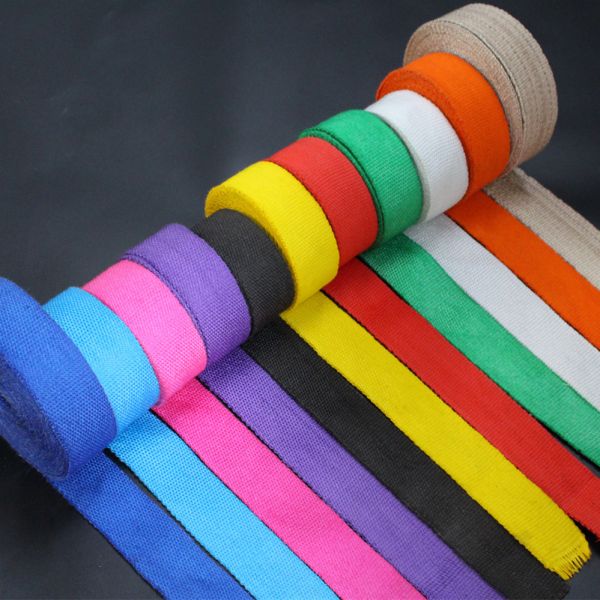
Do not specify one wrap for an entire exhaust assembly without first separating the different thermal and mechanical zones.
| Exhaust zone | Main selection issue | Thermal protection approach to evaluate |
|---|---|---|
| Turbo outlet and hot downpipe | High sustained temperature and limited clearance | Titanium or silica exhaust wrap, subject to measured temperature |
| Manifold and connecting pipe | Complex geometry and repeated thermal cycling | Wrap or shaped removable insulation depending on service access |
| Long straight exhaust pipe | Efficient coverage and personnel/component heat protection | Fiberglass, composite lagging or other suitable wrap construction |
| Exposed off-road section | Abrasion, debris and mechanical contact | Reinforced exhaust wrap or separate mechanical guard |
| Flex joint | Movement and vibration absorption | Keep movement function available; do not automatically wrap across the joint |
| Aftertreatment component | Controlled internal temperature and manufacturer requirements | Follow the equipment specification before adding direct insulation |
This zoning approach prevents a common specification error: selecting one material from its maximum temperature number and applying it to every component.
A heavy-duty diesel engine may operate for hours under sustained load. Excavators, loaders, agricultural equipment, generators and industrial engines can experience much longer thermal exposure than a vehicle used for short road trips.
That changes the selection priorities. Continuous service conditions become more important than a brief peak rating. The installation may also need to withstand:
| Vibration | Repeated movement can loosen end fixings or wear insulation against nearby brackets. |
| Dust and debris | Off-road environments can contaminate or mechanically damage exposed insulation. |
| Oil and fuel contamination | Leaks should be corrected before they contaminate thermal insulation. |
| Water and mud | Outdoor equipment requires consideration of drainage, drying and inspection. |
| Service access | Filters, sensors, clamps and removable exhaust components must remain maintainable. |
For this reason, the best heavy equipment exhaust wrap is not automatically the same product used on a motorcycle header or short-duration racing application.
Fiberglass remains a practical option where the actual operating temperature is within the selected product's capability.
It can be considered for relatively straightforward diesel exhaust pipes where the primary requirement is thermal containment rather than extreme-temperature exposure or strong external abrasion resistance.
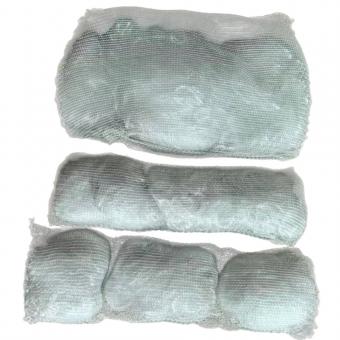
BSTFLEX Black Glass Fiber Exhaust Wrap provides a fiberglass product option for applications where a dark finish is required.
Before specifying fiberglass for a diesel engine, confirm sustained pipe temperature under the highest expected load. A temperature measured during idle operation is not sufficient for equipment that will later operate continuously under load.
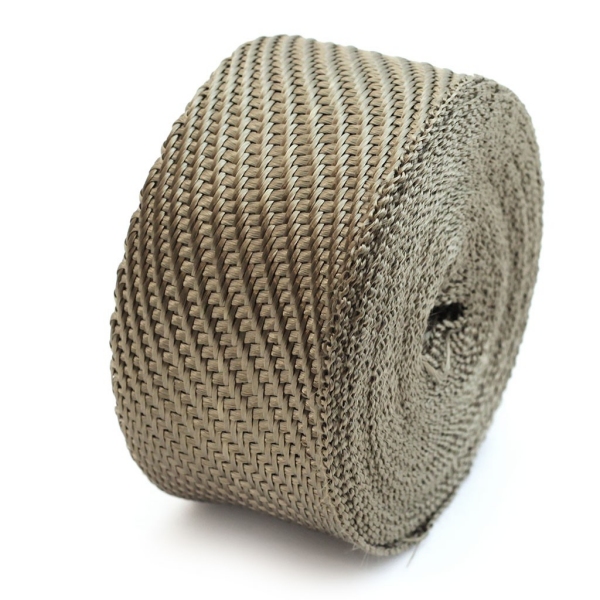
Titanium exhaust wrap is commonly evaluated when the required thermal margin is greater than that of the proposed general-purpose fiberglass construction.
Relevant locations can include turbo downpipes, high-load exhaust pipes and performance-oriented diesel installations.
BSTFLEX Black Titanium Exhaust Pipe Wrap provides a Titanium option within the C15 product range.
Selection should still be based on actual operating conditions. The word “Titanium” is an industry product description and should not be interpreted as meaning that the textile wrap is made from metallic titanium fiber.
Silica exhaust wrap should be evaluated where the exhaust temperature exceeds the practical capability of the lower-temperature constructions being considered.
Typical candidates include turbo-adjacent piping, severe continuous-load diesel systems and other exhaust sections where additional temperature margin is required.
BSTFLEX High Temperature Inferno Header Exhaust Heat Wrap provides a silica-based option for demanding thermal applications.
Do not select silica simply because it has a higher material capability. A premium high-temperature material may add unnecessary cost where fiberglass or Titanium exhaust wrap already meets the validated operating condition.
Some diesel and industrial installations require more than a bare woven textile surface.
BSTFLEX Silicone Exhaust Wrap Composite Fiberglass & Silicone Lagging combines fiberglass insulation with a silicone-coated exterior.
This construction can be evaluated where the project requires a more finished external surface, fiber containment or specific handling characteristics.
The product page currently lists widths of 25, 38, 50, 75 and 100 mm and a published thickness range of 2–3 mm. For repeat OEM supply, specify one required thickness and tolerance rather than ordering only from the broad range.
Keep the temperature capability of the fiber, coating and complete product separate during specification. The highest temperature capability of one constituent should not automatically be treated as the working temperature of the finished composite.
Excavators, loaders, agricultural machinery and other off-road equipment may expose exhaust insulation to mechanical wear that does not occur in a protected engine bay.
BSTFLEX Pro Black Exhaust Heat Wrap combines a high-temperature glass-fiber insulation layer with a 304 stainless steel outer structure.
This reinforced construction can be evaluated where abrasion resistance and protection of the exposed textile surface are important.
However, reinforcement does not replace correct routing or a mechanical guard. If the exhaust repeatedly strikes a frame member, bracket or debris, the installation problem should be corrected rather than expecting the wrap to absorb structural impact.
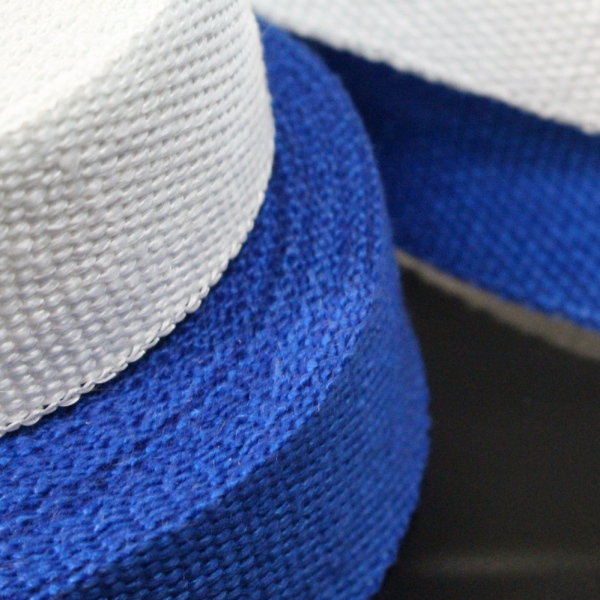
Diesel exhaust wrap should be selected from realistic duty-cycle data.
When requesting material approval, identify:
| Thermal information | Why it matters |
|---|---|
| Normal sustained pipe temperature | Defines the primary continuous exposure. |
| Maximum sustained load condition | Shows whether normal operation approaches the material limit. |
| Short-duration peak temperature | Helps evaluate temporary excursions separately from continuous service. |
| Measurement location | Pipe surface, exhaust gas and external wrap surface are different measurements. |
| Peak duration | A brief transient and a thirty-minute event should not be treated as equivalent. |
Avoid selecting a product only because its datasheet shows the largest number. Confirm whether that number refers to continuous contact, intermittent exposure, radiant heat or the raw fiber rather than the finished wrap.
Modern diesel equipment may include a diesel particulate filter, oxidation catalyst, SCR components and temperature sensors. These components operate within a controlled thermal strategy.
Do not automatically wrap an entire aftertreatment assembly.
Insulating a component can alter its retained heat, external surface temperature and surrounding thermal environment. The equipment manufacturer's specification should determine whether direct-contact insulation is permitted and where coverage begins and ends.
In some heavy-duty vehicle designs, thermal insulation is used on piping between the turbocharger and downstream aftertreatment components while leaving movement joints or specific components unwrapped. The exact arrangement is system-specific and should not be generalized to every diesel engine.
For BSTFLEX projects, identify the component on the drawing rather than describing the entire assembly only as “DPF exhaust.”
Diesel exhaust systems frequently include flexible joints to accommodate vibration, thermal expansion and engine movement.
A tightly applied wrap can interfere with the intended movement of the joint or create additional wear at the transition.
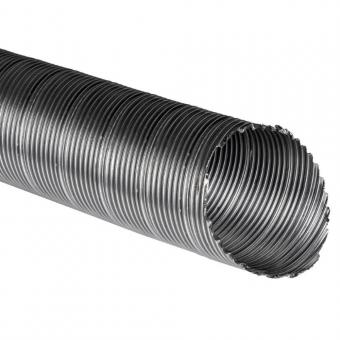
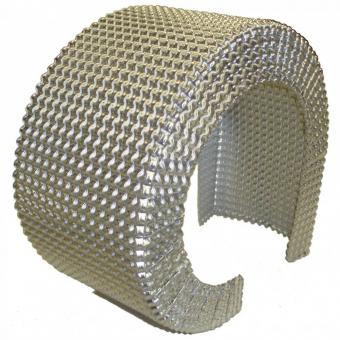
Where thermal protection is required around a flex section, evaluate an insulation method designed to preserve that movement. A removable jacket, external shield or specially engineered flexible cover may be more appropriate than ordinary spiral wrapping.
Exhaust wrap is practical on accessible tubular sections where a permanent installation is acceptable.
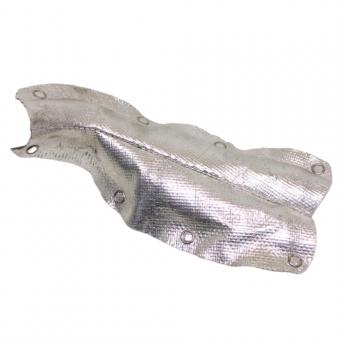
A removable insulation blanket becomes more attractive where:
| The component requires routine inspection or removal. |
| The exhaust shape is too irregular for controlled spiral wrapping. |
| Large-diameter pipe needs a defined insulation thickness. |
| Service technicians need fast access to flanges, sensors or joints. |
Do not force every diesel exhaust component into one insulation method. A complete machine may legitimately use wrap on one pipe, a removable blanket on another component and a metal heat shield near sensitive equipment.
Width affects both installation speed and the ability of the material to follow pipe geometry.
A narrower wrap is easier to position around tight bends and small-diameter tubing. A wider wrap can cover larger straight sections more efficiently.
For industrial projects, wider formats may be more practical than the 1-inch and 2-inch sizes commonly associated with automotive applications. Where BSTFLEX offers a wider construction, confirm that the chosen width can still follow the bends and transitions on the actual assembly.
Do not assume that a 100 mm wrap is automatically more efficient simply because the pipe is large. Trial the most difficult bend before approving the width for the whole system.
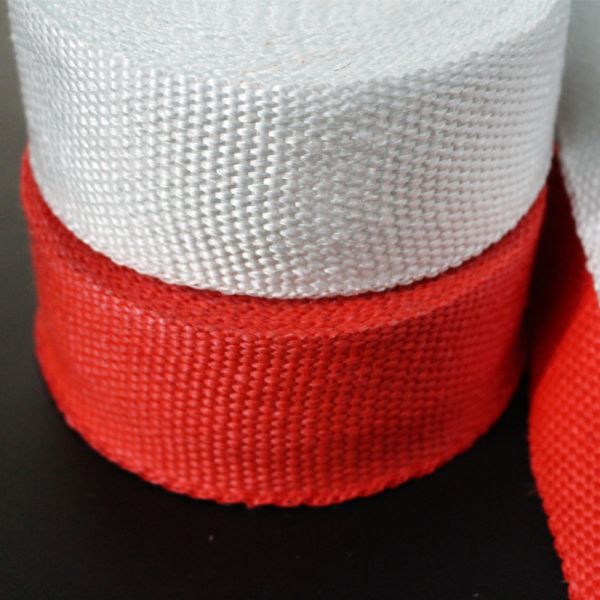
Material consumption depends on pipe outside diameter, covered length, wrap width, overlap and pipe geometry.
BSTFLEX provides an Exhaust Wrap Calculator and Sizing Guide for initial quantity planning.
For heavy equipment, include additional allowance for:
| large-radius and compound bends; |
| diameter transitions; |
| flange clearance; |
| end retention; |
| production installation variation. |
For repeat manufacturing, the most reliable approach is to install the selected material on one actual assembly and record the usable length consumed before defining production roll or cut-length requirements.
Thermal wrap should not conceal an existing mechanical problem.
Before installation, inspect the pipe and welds for leaks, cracks and significant corrosion. Correct oil, fuel or coolant leaks that could contaminate the insulation.
After installation, maintain an inspection schedule appropriate to the equipment. Pay attention to:
| loose or displaced overlaps; |
| damaged end fasteners; |
| abrasion near brackets; |
| fluid contamination; |
| damage caused by service work or debris. |
Do not assume that a wrapped pipe no longer needs inspection.
An OEM diesel exhaust wrap project should define more than a material name.
| RFQ information | Recommended detail |
|---|---|
| Equipment type | Excavator, loader, agricultural machine, generator, industrial engine or other application |
| Exhaust location | Turbo outlet, downpipe, manifold connection or straight pipe section |
| Pipe dimensions | Outside diameter, covered length, bends and transitions |
| Operating temperature | Sustained temperature, peak temperature and peak duration |
| Environment | Dust, moisture, abrasion, oil exposure and service conditions |
| Material preference | Fiberglass, Titanium, silica, silicone composite or reinforced construction |
| Supply format | Rolls, custom lengths, kits or other agreed configuration |
| Quantity | Prototype quantity and expected production demand |
For custom roll lengths, packaging, fastening hardware and repeat supply, see Exhaust Wrap Manufacturer for OEM and Private Label Supply.
There is no universal best material. Fiberglass can suit many general applications, Titanium can provide a higher-temperature option, silica can be evaluated for more severe heat, and reinforced or silicone-composite constructions may be selected where environmental or mechanical requirements are important.
Yes, on suitable exhaust sections where the material, temperature and installation method have been approved. Heavy equipment requires additional attention to vibration, abrasion, contamination and service access.
Do not assume that direct wrap is permitted. Aftertreatment components operate within a controlled temperature system. Follow the equipment manufacturer's requirements before insulating a DPF, catalyst or associated component.
Not automatically. A flex joint needs to move. Thermal protection around that area should preserve its intended function.
No. Silica provides a higher-temperature material option, but fiberglass may be sufficient and more economical where its validated operating range meets the application.
A reinforced construction may be worth evaluating where the exposed textile requires additional mechanical protection. Correct repeated contact and inadequate clearance rather than relying on reinforcement alone.
Yes. Projects can be reviewed for material, width, roll length, cut length, fastening hardware and OEM packaging based on the actual exhaust assembly and order requirements.
Send BSTFLEX the exhaust drawing, pipe dimensions, sustained operating temperature, peak exposure and environmental conditions. Identify the sections requiring insulation and the components that must remain serviceable.
Compare available constructions in the BSTFLEX Exhaust and Header Heat Wrap range, or use the relevant product page for fiberglass exhaust wrap, Titanium exhaust wrap, silica exhaust wrap, silicone composite exhaust lagging or reinforced exhaust wrap.

No.10, Chuangxin North Road, Nanshan Park, Ningguo Economic and Technological Development Zone, Ningguo City, Anhui Province, China
telp/Whatsapp : 0086-15856303740
surel : sales@bstbraidedsleeve.com
Skype : vanesa-cheng