apa yang sedang Anda cari?
Sistem pembuangan menghasilkan salah satu sumber panas paling terkonsentrasi dalam instalasi kendaraan atau mesin. Header, manifold, dan downpipe hanya dapat beroperasi dalam jarak pendek dari kabel listrik, selang, sensor, panel bodi, dan komponen intake. Ketika ruang terbatas, mengendalikan panas tersebut menjadi bagian dari desain sistem, bukan lagi aksesori opsional.
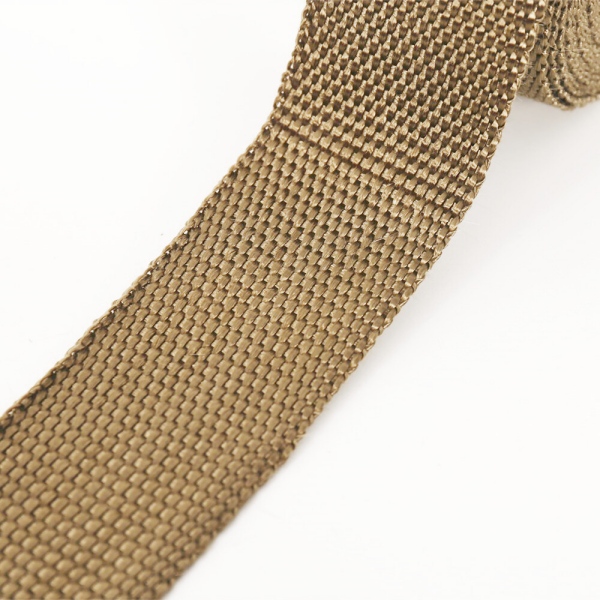
Pembungkus knalpotadalah salah satu cara paling sederhana untuk menempatkan isolasi termal langsung pada pipa panas.
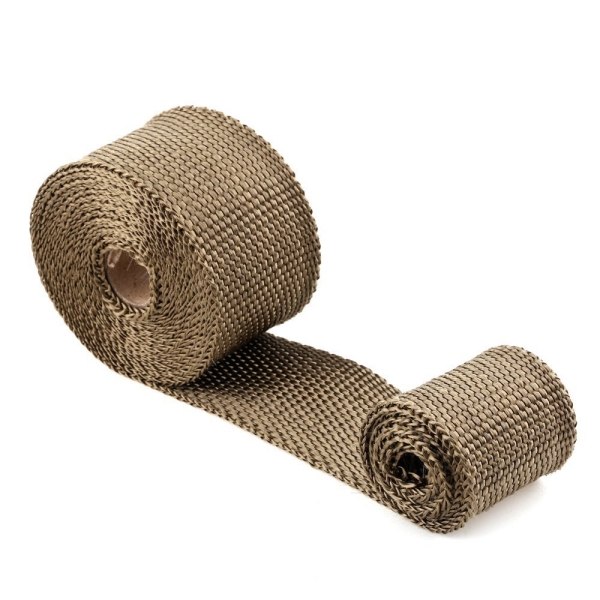
Juga digambarkan sebagaipembungkus panas knalpot, pembungkus pipa knalpot, pembungkus manifoldatau pembungkus isolasi knalpot, ini adalah tekstil tenun tahan suhu tinggi yang dipasang di sekitar pipa knalpot dalam lapisan yang saling tumpang tindih. Sistem serat yang berbeda tersedia untuk rentang suhu dan lingkungan operasi yang berbeda.
BSTFLEX memproduksi berbagai macam produk.pembungkus panas knalpot dan headeruntuk manajemen termal gas buang otomotif, sepeda motor, motorsport, diesel, kelautan, dan industri.
Fungsi utama dari pembungkus knalpot adalah untuk menahan panas.
Pipa knalpot polos mentransfer panas ke lingkungan sekitarnya melalui radiasi dan konveksi. Membungkus pipa menambahkan lapisan tekstil isolasi antara logam panas dan komponen di dekatnya.
Pemilihan kain pembungkus yang tepat dapat membantu:
mengurangi panas radiasi di sekitar pipa knalpot;
batasi paparan panas pada selang, kabel, dan sensor;
mengurangi perpindahan panas ke lantai dan sekat;
meningkatkan kontrol termal di ruang mesin yang padat;
melindungi operator dari kontak yang tidak disengaja dengan permukaan panas;
mempertahankan lebih banyak energi termal di dalam sistem pembuangan.
Poin terakhir inilah mengapa pelindung panas knalpot banyak digunakan di sekitar manifold dan pipa knalpot turbocharger.
Namun, pembungkus knalpot tidak boleh dianggap sebagai bahan perbaikan universal. Pembungkus termal standar ditujukan untuk manajemen panas, bukan untuk menutup pipa yang retak atau memperbaiki kebocoran knalpot.
Memilih sebuahpembungkus pipa knalpotMenilai hanya berdasarkan warna atau lebar adalah kesalahan umum.
Kinerja instalasi yang telah selesai bergantung pada beberapa faktor yang bekerja bersama-sama:
| Faktor Seleksi | Mengapa Ini Penting |
|---|---|
| Suhu gas buang | Menentukan sistem serat yang dibutuhkan |
| Diameter pipa | Memengaruhi lebar pembungkus dan panjang gulungan yang dibutuhkan |
| Geometri knalpot | Tikungan tajam dan saluran pembuangan membutuhkan fleksibilitas yang lebih besar. |
| Tumpang tindih | Memengaruhi ketebalan isolasi dan konsumsi material. |
| Paparan kelembapan | Penting untuk aplikasi jalan raya, kelautan, dan luar ruangan. |
| Kontaminasi minyak dan bahan bakar | Dapat memengaruhi masa pakai jangka panjang. |
| Getaran | Mempengaruhi daya tahan dan metode pengencangan |
| Frekuensi perawatan | Pembungkus permanen mungkin tidak cocok untuk komponen yang dilepas secara berkala. |
Oleh karena itu, pembungkus knalpot terbaik untuk header sepeda motor mungkin bukan bahan yang tepat untuk downpipe turbo atau pipa knalpot diesel industri.
Fiberglass tetap menjadi salah satu material yang paling banyak digunakan untuk isolasi knalpot secara umum.
Bahan ini fleksibel, ekonomis, dan dapat ditenun menjadi pita sempit yang mudah menyesuaikan diri di sekitar tikungan dan transisi pipa. Pembungkus fiberglass umumnya digunakan pada:
manifold knalpot otomotif naturally aspirated;
pipa knalpot sepeda motor;
pipa pengumpul;
pipa knalpot umum;
Pipa industri suhu sedang hingga tinggi.
BSTFLEX menawarkan beberapa konstruksi berbahan dasar fiberglass, termasukPelindung Panas Knalpot Pro Blackyang menggabungkan lapisan isolasi serat kaca suhu tinggi dengan struktur luar baja tahan karat untuk perlindungan tambahan terhadap abrasi dan benturan.
Fiberglass seringkali menjadi titik awal untuk aplikasi di mana biaya, fleksibilitas, dan kontrol panas praktis lebih penting daripada kemampuan suhu maksimum.
Istilahpembungkus knalpot titaniumIstilah ini banyak digunakan di pasar otomotif performa tinggi, tetapi biasanya tidak berarti bahwa lapisan tersebut mengandung titanium metalik.
Produk jenis ini umumnya diproduksi dari serat yang berasal dari basal atau batuan vulkanik.
Serat basal menawarkan fleksibilitas yang baik, ketahanan panas, dan ketahanan terhadap siklus termal berulang. Serat ini sering dipilih untuk:
header performa;
pipa knalpot turbo;
sistem knalpot sepeda motor;
sistem knalpot balap;
instalasi yang terpapar panas lebih tinggi daripada aplikasi fiberglass konvensional.
BSTFLEXPembungkus Pipa Knalpot Titanium HitamProduk ini terbuat dari serat yang berasal dari batuan vulkanik dan tersedia dalam beberapa lebar dan panjang gulungan. BSTFLEX mengidentifikasi produk ini untuk paparan panas langsung hingga 1800°F dengan kemampuan intermiten yang lebih tinggi.
Keunggulan praktis dari lapisan berbahan dasar basal bukan hanya kemampuan menahan suhu yang lebih tinggi. Lapisan ini juga cenderung tetap cukup fleksibel untuk mengikuti lekukan header dan pipa knalpot tanpa memerlukan sistem isolasi yang kaku.
Ketika suhu gas buang melampaui kisaran praktis fiberglass standar, tekstil silika tinggi menjadi pilihan yang lebih tepat.
Serat silika memiliki kandungan silika yang jauh lebih tinggi daripada E-glass konvensional dan digunakan di tempat yang membutuhkan paparan suhu tinggi secara terus menerus.
BSTFLEX memproduksiPembungkus Panas Knalpot Header Inferno Suhu TinggiTerbuat dari benang filamen silika amorf bertekstur. Produk ini dirancang untuk suhu penggunaan hingga 2000°F.
Aplikasi tipikal meliputi:
sistem knalpot turbocharger;
mesin balap berdaya tinggi;
exhaust manifolds;
high-temperature headers;
industrial exhaust lines;
severe thermal zones where fiberglass may not provide enough temperature margin.
Silica wrap should therefore be considered when the design requirement is driven primarily by temperature rather than cost.
Some exhaust systems require more than simple woven fiber insulation.
Dust generation, surface abrasion, moisture exposure and installation cleanliness may also matter.
For these applications, composite constructions can provide additional properties.
The BSTFLEXSilicone Exhaust Wrap Composite Fiberglass & Silicone Laggingcombines a fiberglass insulation structure with a silicone outer treatment. The coating helps contain loose fibers and creates a more durable, cleaner external surface for applications where an exposed untreated textile is less desirable.
This type of construction can be useful on diesel engines, industrial pipework and equipment where durability and handling characteristics are important alongside thermal insulation.
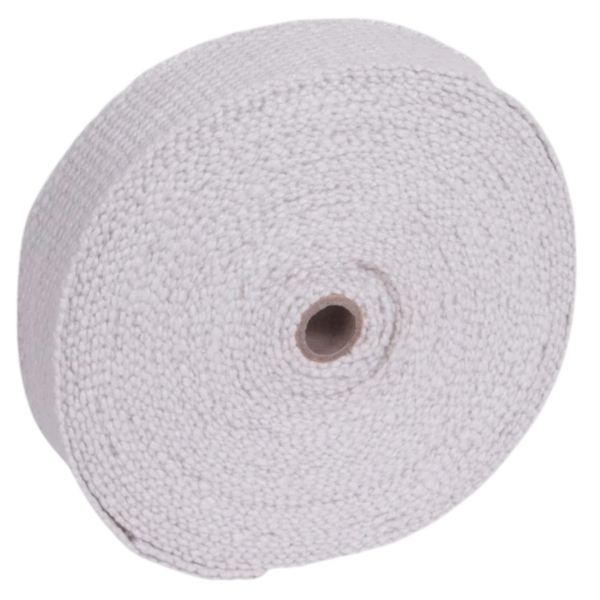
Headers are one of the most common locations forheader wrap.
Individual primary tubes create a large heated surface area, and they often pass close to ignition wiring, brake lines and other heat-sensitive components.
Flexible wrap can follow each primary tube much more easily than a rigid metal shield.
Cast or fabricated exhaust manifolds may also benefit from thermal containment, particularly in compact engine bays.
However, very irregular manifold shapes may be better suited to a removable insulation blanket rather than conventional spiral wrap.
A turbocharger downpipe can be one of the hottest exhaust components outside the turbine housing itself.
Using high-temperatureexhaust heat wraparound a downpipe can reduce radiant heat reaching:
intake piping;
wiring;
brake systems;
bulkheads;
transmission tunnels;
nearby body structures.
For severe turbo applications, basalt or silica materials are generally more relevant than entry-level fiberglass wrap.
Motorcycles expose exhaust headers close to the rider and surrounding bodywork.
For this reason,motorcycle exhaust wrapis used for both thermal management and surface-contact protection.
Fiberglass and basalt-based wraps are commonly selected depending on the temperature and desired appearance.
Diesel engines and generators often operate for long periods under sustained load.
In these systems, exhaust insulation is primarily about:
personnel protection;
nearby equipment protection;
compartment temperature control;
reduction of radiant heat.
Larger industrial systems may use wrap, lagging, removable blankets or combinations of these technologies.
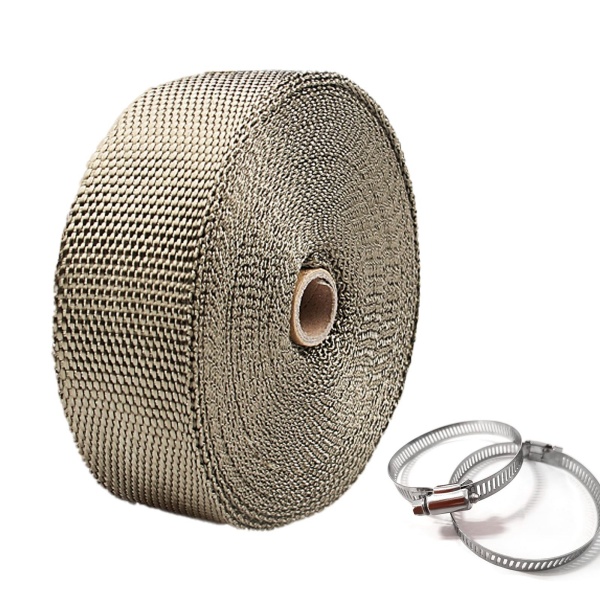
Both products insulate exhaust components, but their construction and installation are different.
Exhaust wrapis installed by winding narrow textile tape around the pipe.
It is best suited to:
headers;
long straight pipe sections;
small-diameter exhaust tubes;
collectors;
downpipes;
motorcycle exhaust systems.
Anexhaust insulation blanketis a preformed textile assembly designed to fit a specific component.
Blankets are more appropriate for:
turbochargers;
large manifolds;
silencers;
large-diameter exhaust pipe;
components that require regular service access.
If the component must be removed frequently, a reusable blanket may be more practical than permanently wrapped tape.
A metal heat shield works differently.
Instead of placing insulation directly against the exhaust pipe, a metal shield normally reflects or blocks radiant heat with an air gap between the hot component and the shield.
This makes metal heat shields useful where:
airflow is available;
the hot component must remain exposed;
service access is important;
direct pipe insulation is not desirable.
Exhaust wrap is generally easier to install around complicated tubing geometry, while a rigid heat shield can be more appropriate when controlling directional radiant heat.
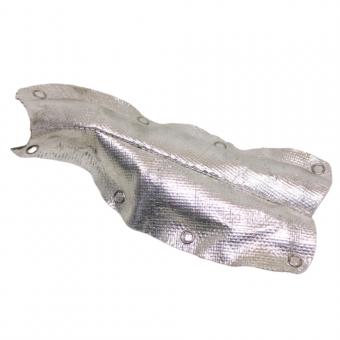
BSTFLEX supplies both textile wraps andexhaust heat shield insulation, allowing the thermal protection method to be matched to the actual installation rather than forcing every system into the same solution.
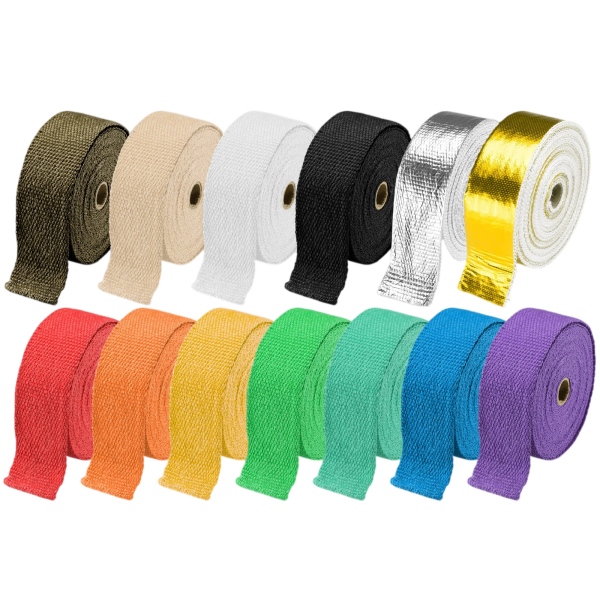
A useful selection process starts with five questions.
Do not select material only from engine horsepower or vehicle type.
Consider both:
continuous operating temperature;
short-duration peak temperature.
A naturally aspirated street engine, turbocharged racing vehicle and industrial diesel generator can have very different thermal requirements.
Stainless steel, mild steel and other exhaust alloys respond differently to repeated heat cycles and moisture exposure.
The pipe condition should also be inspected before wrapping.
Do not cover corrosion, cracks or damaged welds simply to hide them.
A narrow, flexible wrap is useful around:
tight-radius bends;
small motorcycle headers;
complex collectors.
Wider wrap covers straight pipe more quickly but can be harder to position around complicated geometry.
Road vehicles, marine equipment and industrial engines may encounter:
water;
mud;
salt;
oil;
fuel;
dust.
These factors should be considered when choosing both the wrap and any surface treatment.
If the pipe or component needs frequent inspection, a removable jacket or blanket may reduce maintenance time.
BSTFLEX also manufacturesHigh Velocity Jacket Exhaust System Wrap, a jacket-style approach for applications where conventional spiral wrapping is not the preferred installation method.
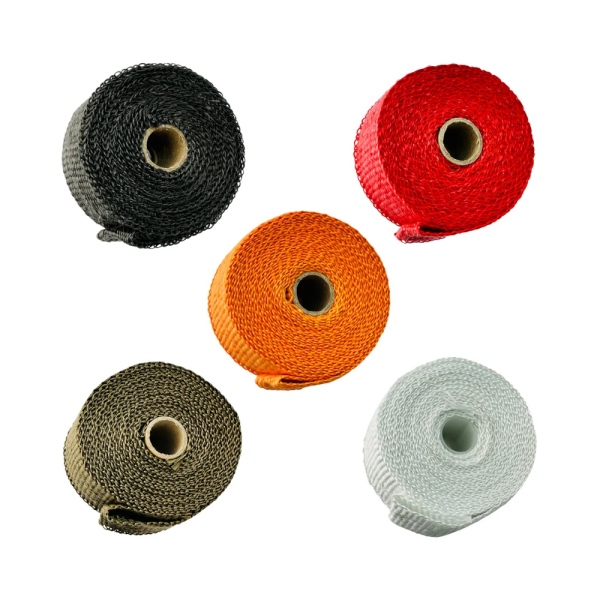
Two widths dominate many automotive installations:
1 inch wrap
Better suited to:
small-diameter tubing;
tight bends;
compact motorcycle headers;
complex collectors.
2 inch wrap
Better suited to:
longer straight exhaust pipes;
larger headers;
downpipes;
applications where faster installation is important.
BSTFLEX also manufactures wider exhaust wrap formats for large-diameter pipes and industrial installations.
The correct width should therefore be selected according to pipe diameter and geometry rather than assuming wider wrap is always better.
Even the correct exhaust wrap can perform poorly if installed incorrectly.
A typical installation involves:
Inspecting and cleaning the exhaust pipe.
Determining the starting point and wrap direction.
Maintaining a consistent overlap.
Working progressively around bends without creating large gaps.
Securing the beginning and end using stainless-steel ties or clamps.
Checking nearby brackets, sensors and moving components.
Re-inspecting the installation after the first thermal cycles.
The exact overlap should follow the product specification and application requirement.
Too little overlap may leave uneven thermal coverage.
Excessive overlap consumes more material and creates unnecessary thickness.
There is no single roll length that fits every exhaust system.
Material consumption depends on:
pipe outside diameter;
total pipe length;
wrap width;
overlap percentage;
number of bends;
collector geometry;
whether multiple layers are required.
For an OEM or production project, the better approach is to calculate material use from an actual drawing, pipe sample or installation specification rather than estimating from vehicle type alone.
BSTFLEX supports custom roll widths and lengths for volume projects where standard retail-sized rolls are inefficient.
Exhaust wrap is effective thermal insulation, but it has limits.
It does not replace:
repair welding;
exhaust leak repair;
damaged flange replacement;
structural pipe repair;
proper heat shielding around extremely sensitive components;
routine inspection of the exhaust system.
It should be treated as part of an engineered thermal management system.
For some installations, the best solution may combine:
exhaust wrap;
removable insulation blankets;
reflective barriers;
metal heat shields;
protective sleeves for nearby wiring and hoses.
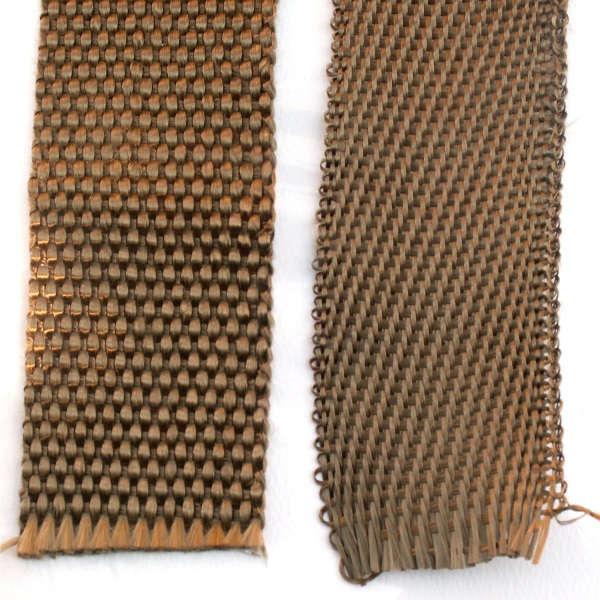
| Exhaust Application | Common Material Direction |
|---|---|
| General automotive header | Fiberglass |
| Motorcycle exhaust | Fiberglass or basalt |
| Performance header | Basalt / titanium-style |
| Turbo downpipe | Basalt or silica |
| Extreme-temperature header | Silica |
| Industrial exhaust pipe | Fiberglass, silica or composite |
| Diesel engine exhaust | Fiberglass, silica or silicone composite |
| High-abrasion area | Reinforced or composite construction |
The final choice should always be based on actual temperature, environment and installation design.
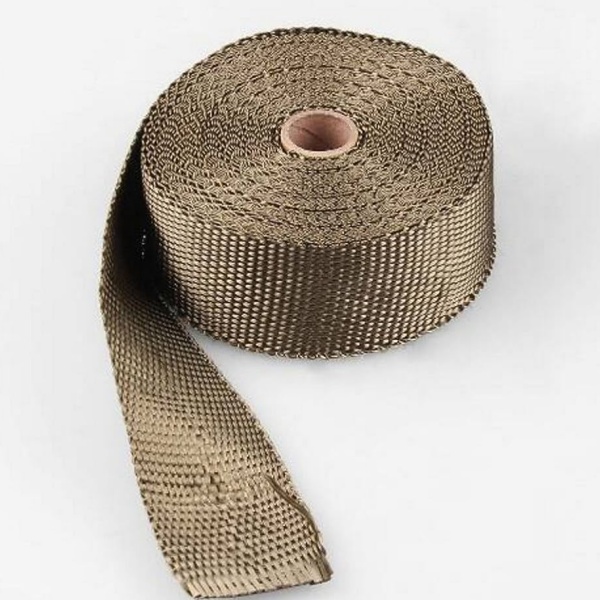
For manufacturers and distributors, exhaust wrap specification goes beyond choosing a fiber type.
Production requirements may include:
non-standard widths;
specific roll lengths;
private-label packaging;
custom colors;
material identification;
stainless-steel fixing ties;
application-specific constructions;
sample-based development.
BSTFLEX manufactures exhaust thermal protection products for OEM, distributor and industrial applications and can develop specifications around the exhaust system rather than supplying only fixed retail configurations.
Explore the completeBSTFLEX Exhaust and Header Heat Wrap rangefor fiberglass, basalt, silica, composite and specialty exhaust insulation products.
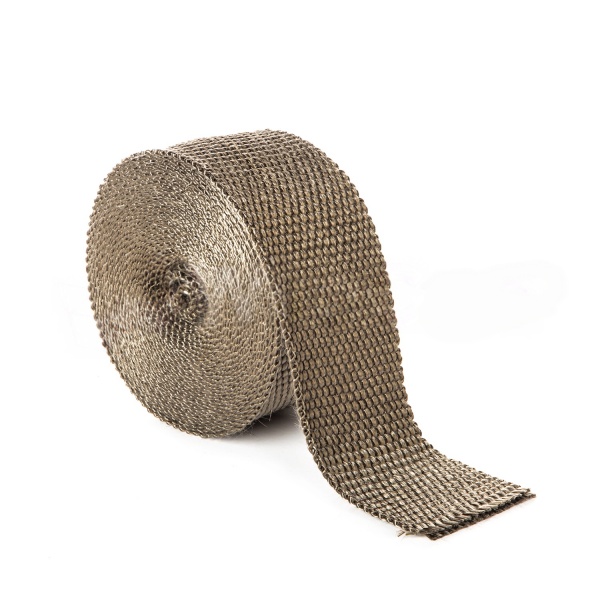
Exhaust wrap is a woven high-temperature insulation tape installed directly around exhaust pipes, headers, manifolds or downpipes to reduce radiant heat and improve thermal containment.
In most automotive and industrial applications, the terms refer to the same general product family. “Exhaust heat wrap” emphasizes its thermal insulation function, while “exhaust wrap” is the broader commercial term.
Tidak ada satu pun material terbaik. Fiberglass cocok untuk banyak aplikasi umum, basal biasanya dipilih untuk sistem berkinerja lebih tinggi, dan lapisan silika tinggi sesuai untuk paparan suhu yang lebih ekstrem.
Ya. Pipa knalpot bagian bawah merupakan aplikasi umum untuk pembungkus knalpot suhu tinggi. Material harus dipilih sesuai dengan suhu knalpot aktual yang kontinu dan puncak.
Biasanya tidak. Produk yang dipasarkan sebagai pelapis knalpot titanium umumnya terbuat dari serat basal atau serat yang berasal dari batuan vulkanik, bukan titanium logam.
Tidak. Pembungkus termal knalpot standar ditujukan untuk manajemen panas, bukan untuk pipa struktural atau perbaikan kebocoran.
Lilitan sempit umumnya lebih mudah dipasang di sekitar pipa berdiameter kecil dan tikungan tajam, sedangkan lilitan yang lebih lebar lebih cepat dipasang pada pipa knalpot yang lebih besar atau lurus.

No.10, Chuangxin North Road, Nanshan Park, Ningguo Economic and Technological Development Zone, Ningguo City, Anhui Province, China
telp/Whatsapp : 0086-15856303740
surel : sales@bstbraidedsleeve.com
Skype : vanesa-cheng