apa yang sedang Anda cari?
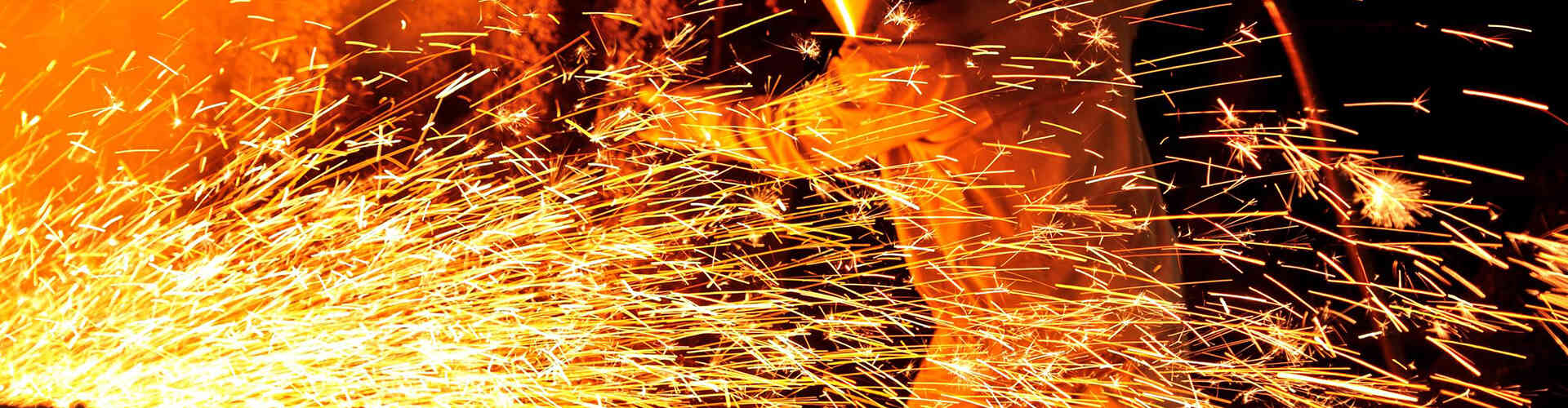
Di dalam knalpot tipe absorpsi, inti berlubang hanyalah sebagian dari sistem akustik. Material yang mengelilingi inti tersebut memiliki pengaruh langsung terhadap kebisingan knalpot, kualitas suara, stabilitas termal, umur pakai kemasan, dan kondisi jangka panjang peredam suara.
Bahan tersebut umumnya dikenal sebagaikemasan knalpot.
Tergantung pada desain knalpot dan pasar, komponen yang sama juga dapat digambarkan sebagaibahan pengemas knalpot,kemasan peredam knalpot, bahan peredam suara, bahan pengisi knalpot, pengisi akustik, wol peredam suara, atau bahan peredam knalpot.
BSTFLEX memasok dan mengembangkan material pengemas suhu tinggi untuk peredam suara sepeda motor, sistem knalpot otomotif, knalpot balap, peredam suara industri, generator, dan rakitan knalpot lainnya.
Jelajahi rangkaian lengkapnyabahan pengemas knalpot.
Peredam suara absorpsi pada umumnya dibangun berdasarkan susunan yang relatif sederhana:
Aliran gas buang → tabung berlubang → lapisan serat pelindung → kemasan akustik → cangkang luar
Gas buang mengalir melalui inti yang berlubang. Energi akustik melewati lubang-lubang tersebut dan masuk ke dalam material berserat di sekitarnya.
Alih-alih hanya mengandalkan ruang atau sekat pembatas, bahan pengisi ini mengubah sebagian energi akustik menjadi sejumlah kecil panas melalui gesekan di dalam struktur serat.
Agar sistem tetap berfungsi, kemasan harus tetap seperti ini:
stabil secara termal,
cukup tangguh,
tahan terhadap erosi akibat tekanan gas buang,
dikemas dengan benar di sekitar inti,
dan mampu mempertahankan struktur seratnya setelah pemanasan dan pendinginan berulang.
Inilah mengapa memilih bahan peredam knalpot hanya berdasarkan peringkat suhu jarang sekali cukup.
Bahan pengisi knalpot melakukan beberapa fungsi secara bersamaan.
Struktur serat terbuka menyerap energi suara yang dihasilkan oleh denyut gas buang. Ini sangat penting pada peredam suara tipe straight-through dan performa tinggi di mana aliran gas melewati tabung tengah yang berlubang.
Kondisi pengemasan dapat memengaruhi tidak hanya tekanan suara tetapi juga nada knalpot.
Pengemasan baru umumnya menghasilkan suara knalpot yang lebih terkontrol dan tidak terlalu metalik. Seiring waktu, ketika serat-seratnya rusak, terkompresi, berpindah tempat, atau hilang, peredam suara dapat menjadi jauh lebih tajam dan lebih keras.
Lapisan pengemas menciptakan pemisahan antara tabung berlubang panas dan selubung peredam suara.
Meskipun bahan peredam suara terutama berfungsi sebagai material akustik, karakteristik termalnya memengaruhi suhu selubung dan daya tahan komponen di sekitarnya.
Pengemasan yang stabil mengurangi beban akustik dan termal langsung pada cangkang luar. Sistem pengemasan yang dirancang dengan baik juga dapat mengurangi kerusakan akibat getaran di dalam peredam suara.
Tidak ada satu pun bahan pengisi knalpot yang ideal untuk setiap sistem pembuangan.
Suhu, kecepatan gas, jenis mesin, interval servis yang diharapkan, target suara, geometri peredam suara, dan metode pembuatan semuanya memengaruhi pemilihan material.
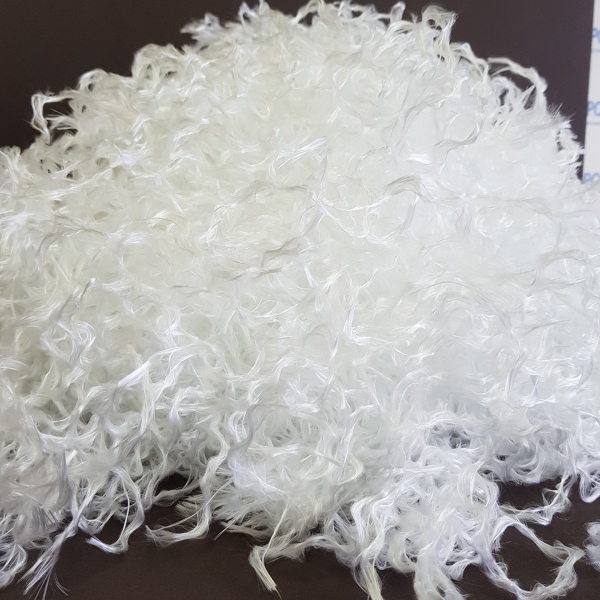
Fiberglass tetap menjadi salah satu material yang paling banyak digunakan dalam peredam suara absorpsi.
Material ini menggabungkan kepadatan curah yang rendah dengan luas permukaan serat yang besar, sehingga memberikan penyerapan akustik yang baik tanpa menambah bobot yang berlebihan.
Bentuk-bentuk umum meliputi:
benang fiberglass lepas,
serat kaca filamen kontinu,
serat kaca bertekstur,
tikar fiberglass,
bantal kemasan fiberglass,
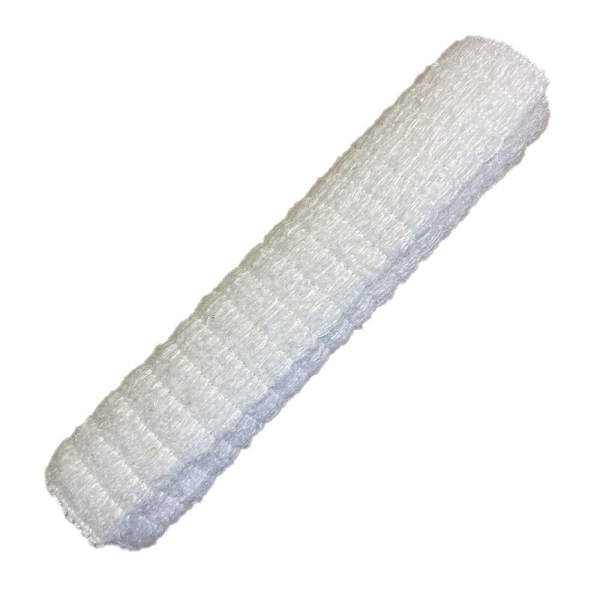
kaus kaki kemasan yang sudah dibentuk sebelumnya,
dan serat kaca yang terdapat di dalam kantung jaring kaca anyaman.
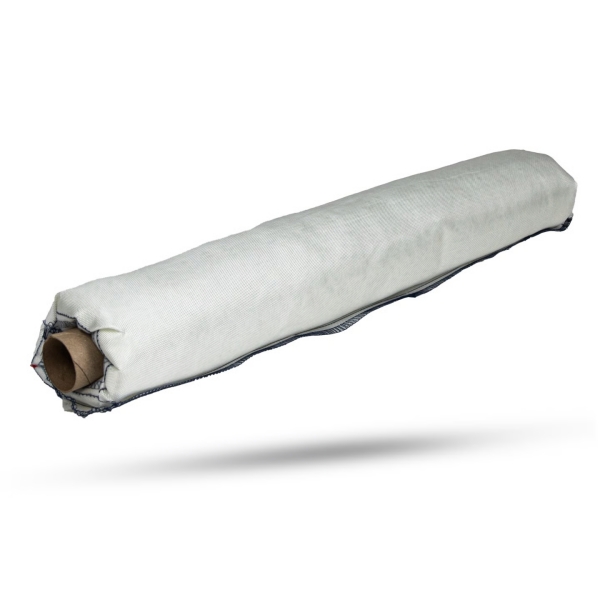
BSTFLEX memproduksi sebuahSarung Pelindung Knalpot Fiberglass dengan Kantong Jaring Kaca Anyamanuntuk aplikasi di mana pemasangan terkontrol dan retensi serat lebih disukai daripada pengemasan yang longgar.
Kemasan fiberglass umumnya dipilih untuk:
knalpot sepeda motor,
Peredam suara ATV dan UTV,
knalpot performa otomotif,
knalpot pengganti,
sistem knalpot balap,
dan banyak knalpot tipe absorpsi OEM.
Keunggulan utamanya adalah keseimbangan antara efisiensi akustik, berat, kemudahan pembuatan, dan biaya.
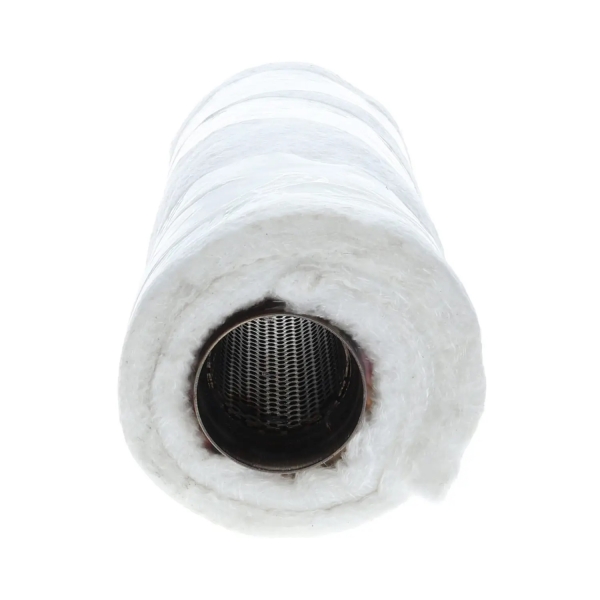
Wol baja tahan karat memiliki fungsi yang agak berbeda.
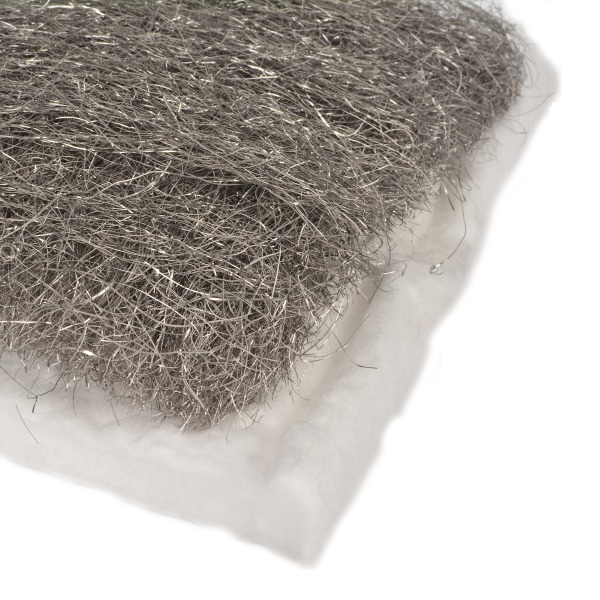
Bahan ini dapat digunakan sebagai bahan pengemas, tetapi dalam banyak sistem knalpot performa tinggi, bahan ini dipasang langsung di sekitar pipa berlubang sebagai lapisan pelindung.
Susunan tipikalnya menjadi:
Inti berlubang → wol baja tahan karat → kemasan serat kaca → selubung peredam suara
Lapisan baja tahan karat membantu melindungi serat akustik yang lebih lembut dari:
gas buang yang sangat panas,
pulsa berkecepatan tinggi,
turbulensi di sekitar lubang perforasi,
paparan api,
dan penataan serat progresif.
Konstruksi ini sangat berguna pada sistem knalpot sepeda motor, balap, turbocharger, dan sistem knalpot berdaya tinggi yang menuntut performa tinggi.
Oleh karena itu, membandingkan fiberglass dan wol baja tahan karat seolah-olah hanya satu material yang dapat digunakan terkadang menyesatkan. Dalam banyak peredam suara, keduanya menjalankan fungsi yang saling melengkapi.
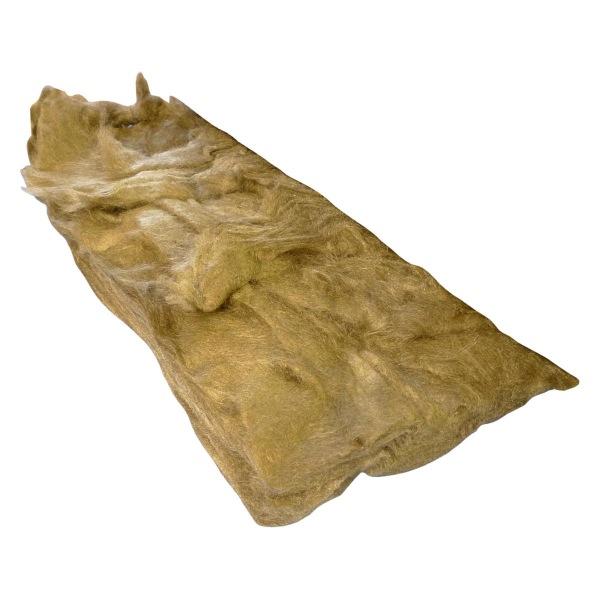
Jika suhu gas buang sangat tinggi, serat keramik dapat dipertimbangkan.
Bahan peredam suara berbahan serat keramik menarik karena kemampuannya menahan suhu tinggi dan konduktivitas termalnya yang relatif rendah.
Kemungkinan aplikasinya meliputi:
high-temperature industrial silencers,
heavy-duty engine exhaust systems,
certain generator exhaust assemblies,
thermal-intensive exhaust equipment,
and special mufflers operating beyond the practical range of conventional glass fiber.
However, the highest temperature material is not automatically the best acoustic material.
Density, fiber diameter, resilience, vibration resistance, handling requirements, and long-term fiber stability must also be evaluated.
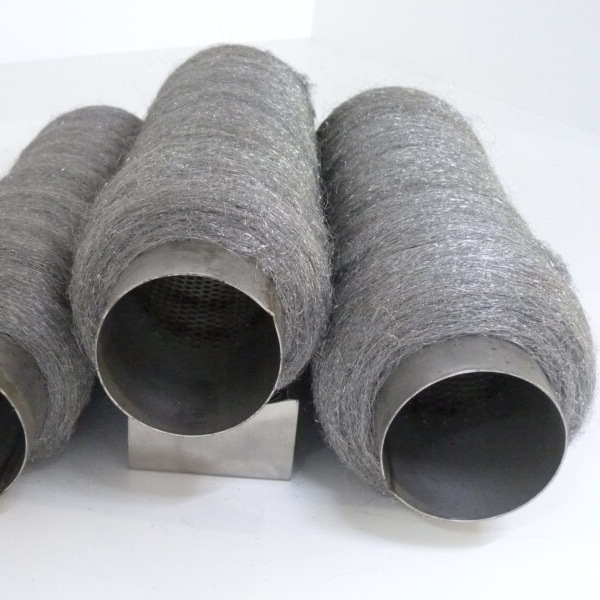
Basalt fiber provides another option between conventional glass fiber and more specialized high-temperature materials.
Produced from volcanic basalt rock, continuous basalt fibers can provide:
good thermal resistance,
mechanical stability,
chemical resistance,
vibration resistance,
and useful acoustic performance.
Basalt muffler packing can therefore be considered for automotive, motorcycle, heavy-duty, or industrial exhaust systems where designers want a mineral-fiber solution with elevated thermal capability.
| Packing Material | Primary Strength | Typical Position | Suitable Applications |
|---|---|---|---|
| Fiberglass | Efficient acoustic absorption | Main packing layer | Motorcycle, automotive, performance exhaust |
| Stainless Steel Wool | Heat and erosion protection | Around perforated core or as metallic packing | Racing, turbo, high gas velocity exhaust |
| Ceramic Fiber | Extreme-temperature capability | Main or supplementary insulation layer | Industrial and severe-temperature silencers |
| Basalt Fiber | Thermal and mechanical durability | Main acoustic packing layer | Heavy-duty, automotive and industrial exhaust |
The correct construction may combine two or more materials rather than using a single fiber throughout the silencer.
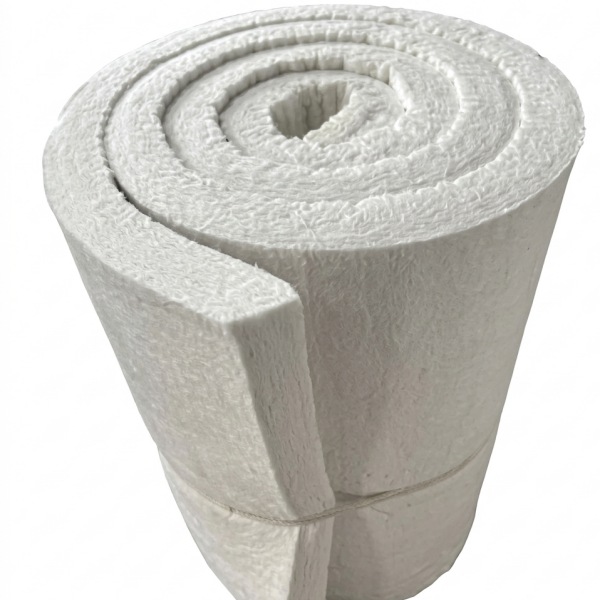
Two mufflers using exactly the same fiber can perform differently simply because the material was installed at different densities.
This is one of the most overlooked aspects of exhaust muffler packing.
If the fiber mass is insufficient, several problems can develop:
reduced acoustic absorption,
rapid fiber movement,
localized empty areas,
increased exhaust noise,
accelerated blowout.
The fibers may also redistribute under vibration and exhaust pulsation.
Over-compression creates another set of problems.
When fibrous material is compressed excessively, the void structure needed for acoustic energy dissipation changes.
The result can be:
poorer sound absorption in certain frequency ranges,
increased silencer weight,
difficult assembly,
reduced fiber resilience,
and unnecessary material consumption.
The goal is therefore not to put the maximum possible amount of packing inside the muffler.
The objective is to achieve a controlled and repeatable packing density suitable for the muffler geometry and target acoustic performance.
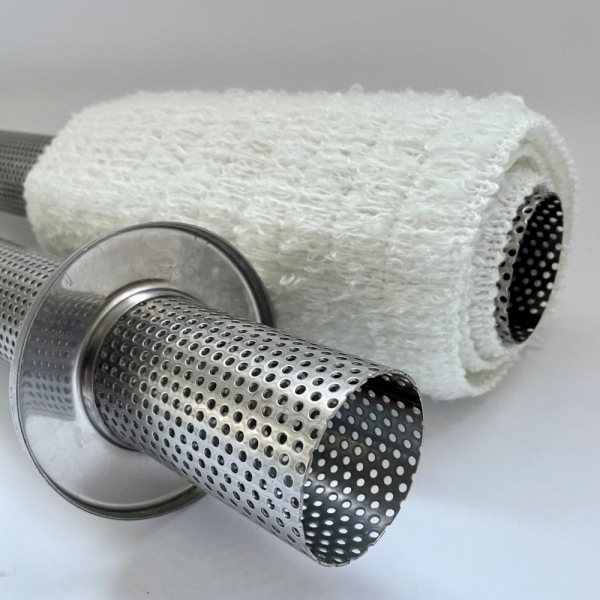
Muffler packing works in one of the harshest environments on a vehicle.
The material may experience thousands of heating and cooling cycles together with vibration and rapidly fluctuating exhaust pressure.
Several deterioration mechanisms can occur.
High-velocity exhaust gases passing through perforations gradually attack exposed fibers.
This is often called fiber blowout.
Continuous exposure to elevated temperature can reduce fiber resilience and alter the packing structure.
Vibration can cause loose packing to migrate or compact.
The silencer may develop areas with insufficient material even when the total amount of packing originally installed was correct.
Condensation, oil residue, incomplete combustion products, and other deposits can affect the condition of the acoustic fibers.
A theoretically suitable material may still fail prematurely if it is packed unevenly or installed at the wrong density.
Muffler packing deterioration is not always visible from outside the silencer.
Several operating changes can indicate that the material should be inspected.
Common signs include:
A noticeable increase in exhaust volume
The muffler gradually becomes louder because the effective acoustic mass has decreased.
A sharper or metallic exhaust note
When the packing layer becomes thin, sound energy interacts more directly with the metal shell.
Fibers coming from the tailpipe
Visible strands or particles at the outlet may indicate packing migration or blowout.
Hot spots on the muffler casing
Loss or movement of the internal packing can create uneven thermal distribution.
Rattling or internal movement
This can indicate loose material or deterioration of internal components.
Motorcycle silencers place especially high demands on packing material because the available volume is limited while exhaust temperatures and pulse velocity can be high.
For this reason, motorcycle exhaust packing normally needs to combine:
strong acoustic absorption,
low weight,
good thermal stability,
resistance to vibration,
easy repacking,
and controlled fiber retention.
Both two-stroke and four-stroke engines use packed silencers, but their operating environments differ considerably.
Two-stroke exhaust packing can be affected heavily by oil, combustion residue, and frequent repacking cycles.
Four-stroke performance exhausts may expose the material to higher sustained temperatures and aggressive exhaust pulses.
Selecting packing purely by motorcycle type is therefore insufficient. Muffler construction and engine operating conditions should also be considered.
Performance exhaust manufacturers often need to reduce sound without introducing excessive backpressure.
Straight-through absorption mufflers are useful in this situation because the exhaust path remains relatively open.
The acoustic packing surrounding the perforated core becomes a critical component.
Depending on the application, manufacturers may specify:
continuous fiberglass packing,
stainless steel wool core protection,
composite stainless/fiberglass systems,
basalt fiber,
or specialized high-temperature fibers.
For racing exhaust systems, packing retention becomes particularly important because high gas velocities can rapidly damage exposed loose fibers.
Industrial silencers operate under a different set of requirements.
Applications can include:
diesel generators,
gas engines,
compressors,
turbines,
exhaust treatment equipment,
heavy machinery,
power generation systems,
and industrial ventilation or acoustic control systems.
In these installations, designers may prioritize:
continuous operating temperature,
acoustic absorption over a specified frequency range,
long maintenance intervals,
fiber stability,
corrosion resistance,
and repeatable packing density.
Industrial buyers therefore often purchase muffler packing by engineering specification rather than simply selecting a consumer repacking kit.
Manufacturers normally have several ways to introduce fiber into a silencer.
Loose fibers or strands allow considerable flexibility during assembly.
They work well where the muffler geometry varies or packing is performed manually.
The challenge is maintaining consistent density from one muffler to another.
Mats provide more predictable thickness and make material handling easier during production.
They are especially suitable when the silencer has a regular cylindrical geometry.
A measured amount of fiber is enclosed inside a lightweight retaining fabric or mesh.
This allows manufacturers to control fiber mass before installation.
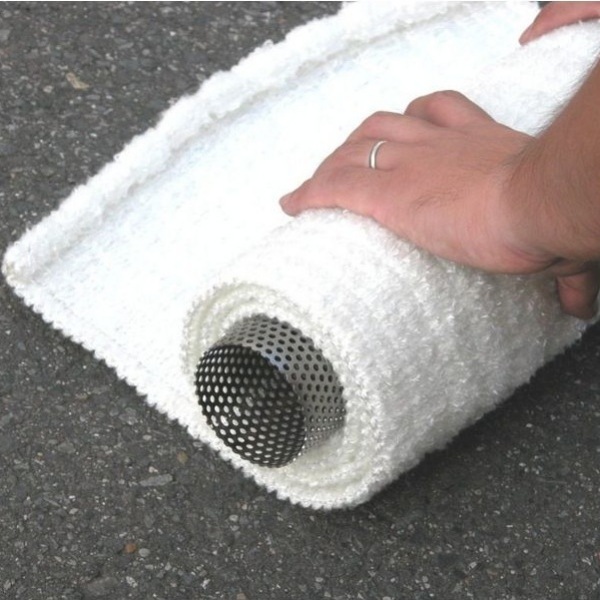
A tubular packing assembly can be fitted around the perforated core, reducing installation time and helping maintain circumferential coverage.
BSTFLEX develops customized packing formats including fiberglass-based assemblies for OEM exhaust production.
A purchase specification should contain more information than simply:
“Fiberglass muffler packing.”
For repeatable production, buyers should consider supplying:
| Specification Item | Why It Matters |
|---|---|
| Fiber material | Determines thermal and mechanical behavior |
| Silencer internal diameter | Defines available packing space |
| Perforated core diameter | Determines required packing thickness |
| Muffler length | Determines fiber quantity |
| Target packing density | Influences acoustic performance |
| Continuous exhaust temperature | Determines material suitability |
| Peak temperature | Identifies short-duration thermal exposure |
| Engine type | Helps evaluate exhaust environment |
| Packing format | Loose fiber, mat, pillow, sock or custom assembly |
| Annual quantity | Determines manufacturing and packaging method |
When these parameters are available, the packing can be engineered around the silencer rather than supplied as a generic bulk fiber.
Manual loose packing creates several variables.
One operator may install more material than another. Distribution around the perforated tube may also vary.
Preformed systems reduce this variability.
A packing sock, bag, pillow, or measured mat can provide:
defined material weight,
more uniform circumferential distribution,
reduced fiber handling,
shorter assembly time,
cleaner production,
improved batch repeatability.
For medium- and high-volume exhaust manufacturing, those manufacturing benefits can be as important as the thermal properties of the fiber itself.
A practical starting point is to identify the dominant failure risk.
Consider fiberglass as the primary acoustic layer.
Consider a stainless steel wool or metallic mesh protection layer before the main fiber packing.
Evaluate ceramic or other elevated-temperature fibers.
Consider materials and packing forms with stronger dimensional stability and controlled retention.
Consider preformed socks, pillows, mats, or custom packing assemblies rather than uncontrolled loose fill.
BSTFLEX manufactures high-temperature thermal and acoustic materials for exhaust systems and can support both replacement packing and OEM silencer production.
Available development options can include:
fiberglass muffler packing,
glass fiber silencer packing,
stainless steel wool packing,
ceramic fiber packing,
basalt-based packing,
loose fiber,
mats,
rolls,
packing bags,
packing pillows,
tubular packing socks,
and customized preformed assemblies.
Sizes, packing weight, fiber combination, retaining construction, and packaging can be developed according to customer drawings, samples, or silencer dimensions.
For applications requiring easier assembly and improved fiber containment, see theFiberglass Muffler Packing Sock with Woven Glass Mesh Bag.
For additional material options, visit theBSTFLEX Muffler Packing category.
There is no universal best material. Fiberglass is widely used because of its acoustic efficiency and weight, stainless steel wool is effective for protecting packing near the perforated core, while ceramic and basalt fibers may be selected where higher temperature capability is required.
Yes. Fiberglass is one of the most common acoustic materials used in absorption-type exhaust silencers because its fibrous structure provides efficient sound absorption while remaining relatively lightweight.
It can be used alone in some designs, but stainless steel wool and fiberglass often perform different functions. Stainless steel wool can protect the inner packing from exhaust erosion, while fiberglass provides the principal acoustic absorption layer.
Packing can escape because of fiber erosion, excessive gas velocity, damaged retaining mesh, incorrect packing density, thermal degradation, or deterioration around the perforated core.
Not necessarily. Excessive compression can reduce the open fiber structure needed for effective acoustic absorption. Packing density should be controlled rather than maximized.
There is no fixed interval for every exhaust system. Replacement frequency depends on exhaust temperature, engine type, riding conditions, packing material, gas velocity, silencer design, and operating hours.
Ya. Kemasan OEM dapat dipasok sesuai dengan diameter inti, diameter cangkang, panjang peredam suara, berat kemasan yang ditargetkan, spesifikasi material, persyaratan suhu, dan format pemasangan yang diinginkan.
Cangkang peredam suara yang terlihat seringkali mendapat perhatian paling besar selama perancangan knalpot, tetapi material yang tersembunyi di antara cangkang tersebut dan inti berlubang menentukan sebagian besar perilaku akustik peredam suara.
Direkayasa dengan benarbahan pengemas knalpotseharusnya tidak hanya bertahan terhadap panas.
Hal ini harus menjaga hubungan yang tepat antara struktur serat, kepadatan, penyerapan akustik, ketahanan terhadap erosi, dan konsistensi pemasangan.
Untuk peredam suara standar sepeda motor dan mobil, fiberglass tetap menjadi salah satu pilihan yang paling serbaguna. Untuk lingkungan knalpot yang menuntut, wol baja tahan karat, serat keramik, serat basal, atau kombinasi multi-lapisan dapat memperpanjang masa pakai.
Bagi produsen knalpot OEM, langkah selanjutnya bukan sekadar memilih serat.
Ini mendefinisikan yang benarsistem pengemasan peredam knalpotuntuk geometri peredam suara, suhu gas buang, target akustik, dan metode produksi.
BSTFLEX dapat memproduksi dan menyesuaikan bahan pengemas peredam suara untuk sistem knalpot sepeda motor, otomotif, balap, generator, kelautan, dan industri.
Hubungi BSTFLEX dengan dimensi peredam suara Anda, suhu operasi, format pengemasan yang dibutuhkan, dan jumlah tahunan untuk pemilihan material dan pengembangan sampel.

No.10, Chuangxin North Road, Nanshan Park, Ningguo Economic and Technological Development Zone, Ningguo City, Anhui Province, China
telp/Whatsapp : 0086-15856303740
surel : sales@bstbraidedsleeve.com
Skype : vanesa-cheng