apa yang sedang Anda cari?
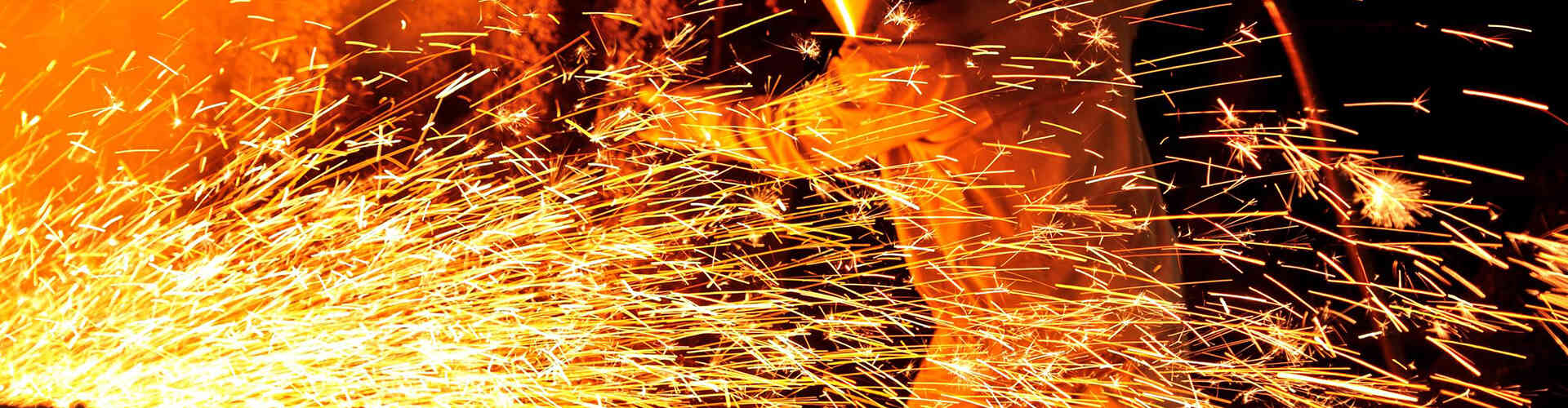
Exhaust insulation on an off-road vehicle has two jobs to consider: controlling heat and remaining intact in the installation environment. A wrap selected only for its temperature rating may still be unsuitable where its exposed surface is vulnerable to abrasion, debris or damage during servicing.
Stainless steel reinforced exhaust wrap combines textile insulation with an external metal reinforcement. BSTFLEX Pro Black and Pro Tan Exhaust Heat Wrap use high-temperature glass fiber with a 304 stainless steel outer layer for off-road, powersports and performance exhaust applications. They provide a reinforced option within the BSTFLEX exhaust and header heat wrap range.
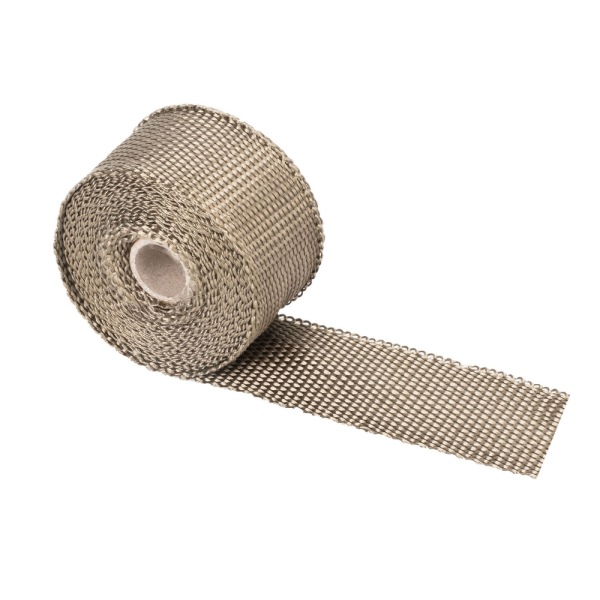
The glass fiber and stainless steel serve different purposes. The textile provides insulation, while the external reinforcement helps protect the textile surface against mechanical wear. Selecting a reinforced construction therefore involves both thermal requirements and the conditions around the pipe.
This is not simply a roll of stainless steel foil, nor is it loose wire mesh used inside a silencer. It is a composite exhaust wrap with an insulating textile component and a protective outer structure.
For buyers searching for abrasion resistant exhaust wrap, the important question is what causes the abrasion. Occasional surface contact, repeated movement against a bracket and a direct strike from a rock are different problems. Reinforcement may be appropriate for the first condition; the others may require revised clearance, pipe support or a separate guard.
A reinforced wrap is not a structural impact guard and does not make an exhaust safe to touch. Keep required shields in place and maintain clearance from people, wiring, hoses and combustible materials.
When specifying ATV exhaust wrap or UTV exhaust wrap, map the pipe against nearby panels, wiring and service points. Check the section that needs insulation and identify where the outer surface will be exposed. Evaluate a reinforced sample where surface durability is part of the requirement, subject to approval for the exhaust system.
Do not select a roll solely from the vehicle category. Pipe diameter, bends, available clearance and maintenance access should determine the coverage plan.
For off-road exhaust wrap used on a competition vehicle, inspect any previous insulation before choosing a replacement. Localized damage near a bracket suggests a different corrective action from widespread damage along a hot section. Record where the failure started rather than assuming every problem calls for a higher temperature grade.
Where direct debris impact is expected, evaluate the guard and mounting arrangement as well as the insulation. A reinforced wrap should not be the only protection against a load capable of damaging the pipe itself.
A powersports exhaust wrap may need to fit between guards, foot controls and closely routed pipe sections. Trial the proposed construction on the tightest bend and smallest clearance before approving the full installation. Surface reinforcement is useful only when the completed assembly still fits and remains serviceable.
BSTFLEX offers black and tan versions of this reinforced construction. Select the finish required for the project, then confirm the roll size and installation specification.
| Product | Construction | Listed width | Listed roll lengths |
|---|---|---|---|
| Pro Black Exhaust Heat Wrap | High-temperature glass fiber with a 304 stainless steel outer layer | 1.5 inches | 10 ft, 20 ft and 30 ft |
| Pro Tan Exhaust Heat Wrap | High-temperature glass fiber with a 304 stainless steel outer layer | 1.5 inches | 10 ft, 20 ft and 30 ft |
For metric purchasing, 1.5 inches equals 38.1 mm. Identify the required manufacturing dimension and tolerance instead of treating every nominal 38 mm product as an exact substitute. Request confirmation of any non-standard width or length before finalizing an order.
Color is a finish choice, not evidence of a different temperature capability. For a matched product range, approve the black and tan samples against the same relevant dimensional and installation requirements.
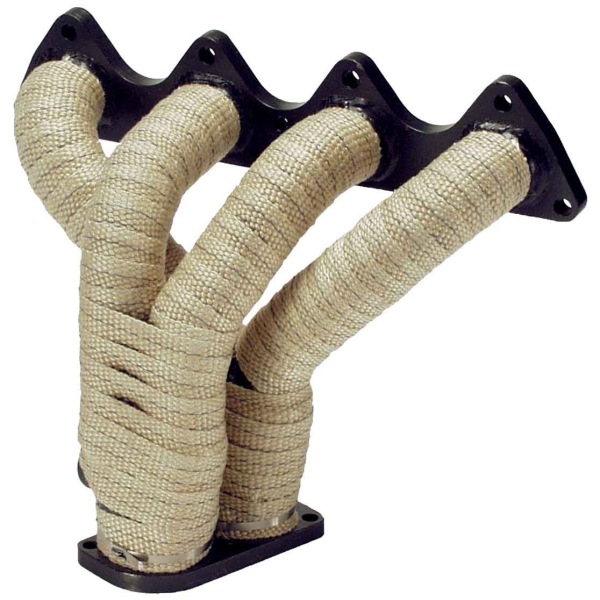
A stainless steel outer layer does not, by itself, establish the continuous operating temperature of the complete wrap. Selection must account for the textile, any finish, the construction and the actual exposure.
Provide the expected sustained pipe temperature, short peaks and their duration. Distinguish pipe-surface measurements from exhaust-gas measurements, and identify whether any quoted material limit refers to direct contact, radiant exposure or intermittent service.
If an existing wrap shows damage away from contact points, investigate the operating conditions before specifying reinforcement as the remedy. Conversely, when the insulation remains otherwise sound but is worn through at one bracket, correct the contact condition before installing a new wrap.
For sample evaluation, define the result you need to verify: retained coverage, absence of exposed insulation, acceptable nearby-component temperature or resistance to a specified wear condition. Do not substitute a general heavy duty exhaust wrap label for an acceptance criterion.
The listed 1.5 inch exhaust wrap should be evaluated on the actual geometry. Check the inside radius of bends, transitions into collectors and the space beneath existing guards. A satisfactory fit on a straight tube does not prove that the same construction will sit correctly throughout the assembly.
Use the overlap specified for the selected product. The outer reinforcement must sit consistently through the overlap without exposed edges or excessive bunching. Do not automatically transfer the overlap used with a different tape.
Measure the completed outside dimension, including overlaps and fasteners. Check clearance through the required range of component movement, not only with the vehicle stationary. Metal reinforcement must not become a new rubbing surface against a nearby hose or harness.
For roll-length planning, measure each covered section and allow for bends, diameter changes and end fixing. Confirm the final consumption with a trial installation before setting the cut length for repeat production.
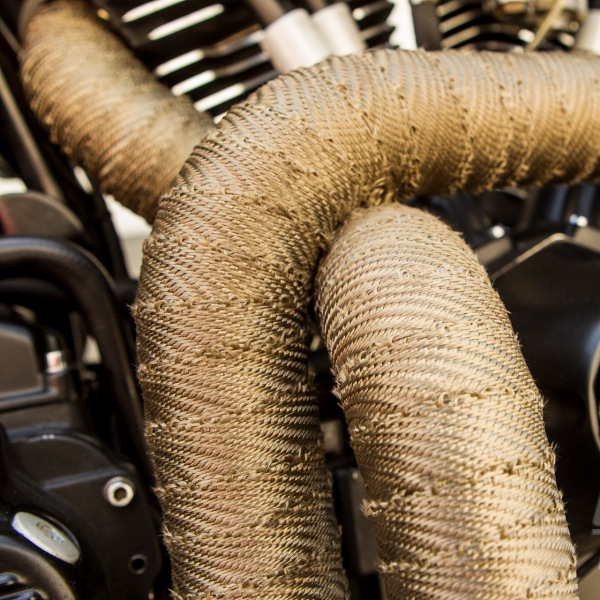
Begin with a fully cooled, mechanically sound exhaust. Repair leaks, cracked welds and significant corrosion before applying insulation. Wear suitable hand and eye protection, and follow the supplied handling instructions for both the textile and metal reinforcement.
Lay out the coverage before cutting. Keep sensors, clamps, springs, flanges and required service fasteners accessible. Confirm whether any wetting or surface treatment is permitted for this construction; instructions for another wrap should not be assumed to apply.
Maintain the specified tension and overlap, then secure the installation with the approved high-temperature fixing method. Do not assume that an overlapping outer structure eliminates the need for end retention. Position and finish metal fastener tails so they cannot contact surrounding components.
The Pro Black and Pro Tan product guidance advises against wrapping catalytic converters, flex pipes, flex joints and titanium-metal exhaust systems. These exclusions still apply when an application requires additional abrasion protection.
The products are also not intended to be moved or removed after heat cycling. Plan service access before installation rather than assuming the same wrap can be repeatedly removed and refitted.
Include insulation checks in the vehicle's maintenance plan. Inspect for displaced overlaps, loose end fixings, damaged metal strands, exposed textile and wear at adjacent brackets. Check both the wrap and the component that may have contacted it.
Do not treat a stainless steel outer layer as a waterproof enclosure or as corrosion protection for the pipe underneath. For wet or dirty service, assess drainage, contamination and the practicality of the inspection method during sample approval.
Keep oil and fuel contamination out of the insulation. Correct the source of any leak and assess affected material before further operation; do not attempt to remove contamination by running the exhaust hotter.
Where the pipe must be uncovered frequently, evaluate a removable thermal-protection arrangement instead of specifying a wrap that is not designed for repeated removal.
For an OEM assembly or distributor kit, approve more than the appearance of an unused roll. A useful review includes the material sample, a fitted sample and the proposed packed configuration.
| Approval item | What to define |
|---|---|
| Construction | Selected product, textile component, stainless steel outer layer and finish |
| Dimensions | Width, thickness, usable length and required tolerances |
| Fitted condition | Covered sections, overlap, end retention, bend fit and finished clearances |
| Evaluation conditions | Thermal exposure, relevant wear conditions and agreed acceptance criteria |
| Kit contents | Roll quantity, fastening hardware, installation instructions and packaging |
Record the approved configuration for repeat orders. Include photographs of critical bends and fixing positions where they help explain the installation requirement.
For quotation preparation, packaging and sample requirements, see Exhaust Wrap Manufacturer for OEM and Private Label Supply. State any custom requirements separately from the published roll options.
In this product range, it is an exhaust insulation wrap combining high-temperature glass fiber with a 304 stainless steel outer layer. It is not an all-metal tape or a replacement for internal silencer packing.
Evaluate reinforcement when protecting the exposed insulation surface is an important requirement. Confirm thermal suitability separately, and correct persistent contact or inadequate clearance rather than relying on reinforcement alone.
It is a candidate for approved off-road exhaust installations. Suitability depends on the pipe material, temperature, geometry and required access, not simply on whether the vehicle is an ATV or UTV.
Do not infer a higher rating from the outer metal alone. Use the operating limits confirmed for the complete product and the intended installation.
The published product guidance does not recommend moving or removing these wraps after heat cycling. Plan the installation accordingly and evaluate a removable alternative where repeated access is required.
Send BSTFLEX the pipe dimensions, temperature requirement, exposure conditions and required quantity. Identify the sections to be covered and any critical clearances. For kits, include the fastening and packaging requirements so the wrap and accessories can be reviewed as one configuration.
Use Pro Black reinforced exhaust wrap or Pro Tan reinforced exhaust wrap as the product reference when requesting samples or a quotation.
tag :

No.10, Chuangxin North Road, Nanshan Park, Ningguo Economic and Technological Development Zone, Ningguo City, Anhui Province, China
telp/Whatsapp : 0086-15856303740
surel : sales@bstbraidedsleeve.com
Skype : vanesa-cheng